
Can Massage Help Jaw Tension and TMJ-Related Muscle Pain?
If you regularly wake up with a tired jaw, catch yourself clenching your teeth while working, or notice tenderness around your temples, cheeks, neck, or shoulders, the muscles around your jaw may be working harder than you realize.
Jaw tension can develop for many reasons, including teeth clenching or grinding, stress, prolonged concentration, repetitive chewing habits, and problems involving the temporomandibular joint.
Massage may help some people when muscle tension is part of the problem. Gentle treatment around the jaw, temples, neck, shoulders, and upper back may help address muscular tenderness, tightness, and protective guarding.
However, jaw pain is not always muscular. Dental problems, joint disorders, arthritis, injuries, infections, nerve conditions, and other concerns can cause similar symptoms. Understanding what massage may realistically support—and when to see a dentist or medical provider—is important.
What Is the TMJ?
TMJ stands for temporomandibular joint. You have one temporomandibular joint on each side of your face, located just in front of your ears. These joints connect the lower jaw to the skull and help the jaw open, close, move side to side, and move forward and backward.
The broader term TMD, or temporomandibular disorders, refers to a group of conditions that affect the jaw joints, the muscles used for chewing, or both. The National Institute of Dental and Craniofacial Research describes TMDs as conditions that may cause pain and dysfunction in the jaw joint and muscles that control jaw movement.
What Does TMJ-Related Muscle Pain Feel Like?
Symptoms can vary from one person to another. Common complaints may include:
- Aching or tenderness around the jaw
- Tightness through the cheeks
- Tenderness around the temples
- Pain or fatigue while chewing
- Jaw stiffness
- Difficulty opening the mouth comfortably
- Headaches
- Neck discomfort
- Aching around the ear
- Clicking or popping
- Pain while yawning
- Tension that worsens during stressful or demanding days
Jaw-related muscle tension may also overlap with tension headaches and neck and shoulder tension from prolonged desk work .
One important distinction is that clicking or popping without pain or restricted movement is common and does not automatically indicate that treatment is necessary.
What Causes Jaw Tension?
Jaw tension does not have one single cause. Potential contributors may include:
- Teeth clenching
- Teeth grinding, also called bruxism
- Stress
- Concentrating while holding the jaw tense
- Frequent gum chewing
- Nail biting
- Repetitive chewing
- Overworked jaw muscles
- Temporomandibular disorders
- Arthritis affecting the jaw joint
- Previous injury
- Dental problems
- Neck and shoulder muscle tension
Bruxism can occur while awake or during sleep. According to Mayo Clinic , frequent clenching or grinding may contribute to tight or tired jaw muscles, jaw and facial soreness, headaches, and tooth-related problems.
Can Massage Help Jaw Tension?
Massage may help when symptoms involve muscular tension, tenderness, or myofascial discomfort around the jaw.
Research into manual therapy for temporomandibular disorders suggests that hands-on treatment may help reduce pain and improve mouth opening for some people. A systematic review of randomized controlled trials found evidence supporting manual therapy for improvements in pain, maximum mouth opening, and disability in people with TMD.
That does not mean massage alone can correct every TMJ disorder. It is better viewed as supportive care when muscular tension is one component of the problem.
If you are dealing with recurring muscle tension elsewhere in the body, you may also find our guide to how medical massage may support chronic pain management helpful.
What Massage May Help—and What It Cannot Fix
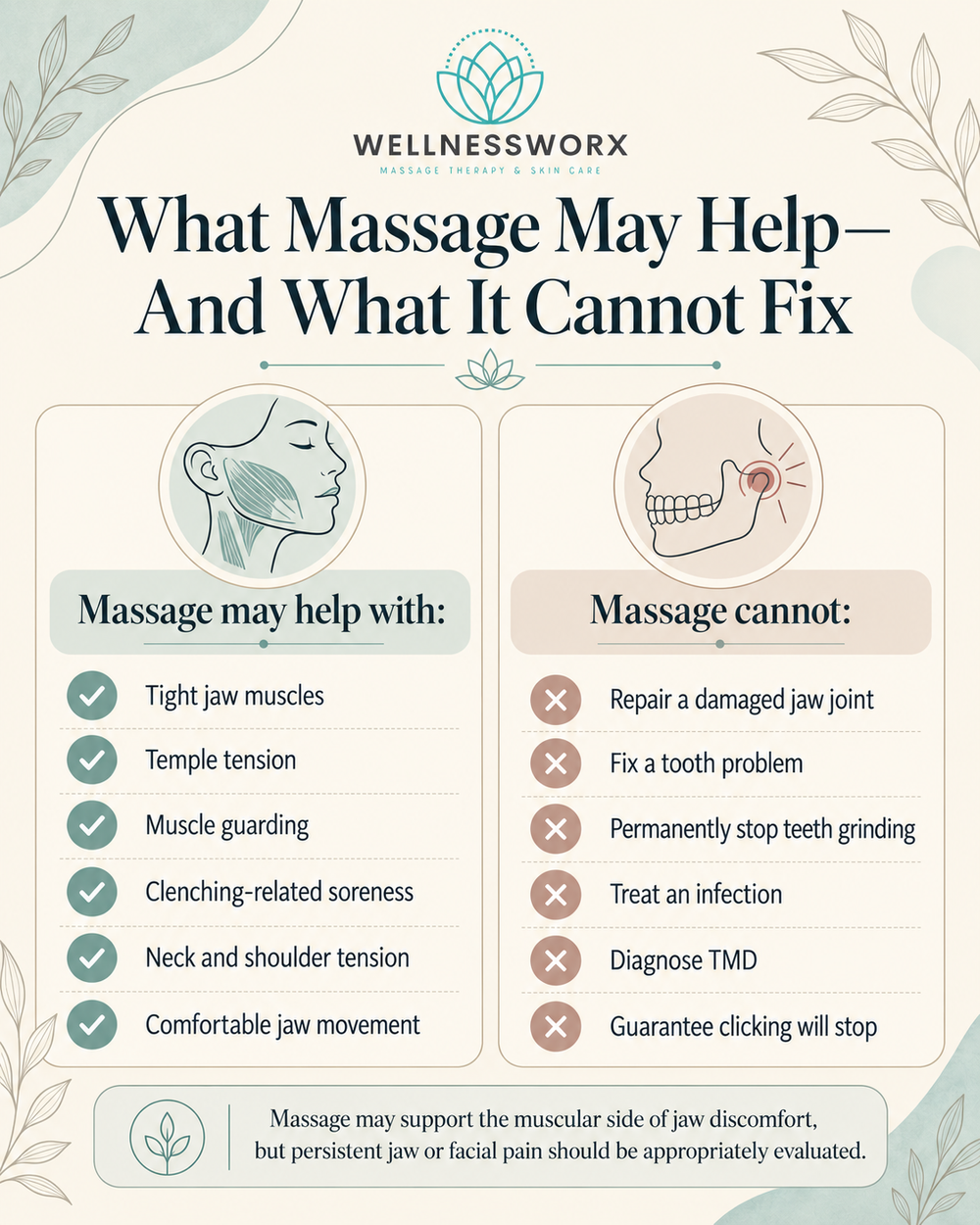
Massage may help support:
- Tight jaw muscles
- Tender chewing muscles
- Muscle guarding
- Temple tension
- Neck and shoulder tension
- Clenching-related muscle soreness
- Comfortable jaw movement
- Relaxation
- Muscular contributors to some tension headaches
Massage cannot:
- Repair a damaged jaw joint
- Permanently stop teeth grinding
- Correct a dental problem
- Treat a tooth or facial infection
- Permanently reposition the jaw
- Repair significant joint degeneration
- Diagnose the cause of facial pain
- Guarantee clicking or popping will stop
- Replace dental or medical evaluation when it is needed
The key difference: Massage may support the muscular side of jaw discomfort, but it cannot correct every dental, structural, joint-related, or neurological cause of jaw pain.
How May Massage Support Jaw Tension?
1. It May Reduce Tension in the Chewing Muscles
Several muscles help move the jaw while chewing and speaking. Two of the most familiar are the masseter along the side of the jaw and the temporalis along the side of the head.
Someone who frequently clenches may keep these muscles active for long periods. Over time, they may feel fatigued, tender, tight, or sensitive to pressure. Gentle massage may help reduce some of this muscular tension.
2. It May Address Temple Tension
The temporalis muscle extends across the side of the head and contributes to jaw movement. People who clench their teeth sometimes notice temple pressure, tenderness, or headache-like discomfort.
Gentle external massage around the temples may be incorporated when appropriate.
3. It May Help Reduce Protective Muscle Guarding
When an area hurts, surrounding muscles may tighten automatically. This is sometimes called protective muscle guarding.
Pain → guarding → more muscular tension → greater discomfort
Massage may help interrupt part of this cycle by encouraging tense muscles to relax. Treatment should remain comfortable and should never involve forcing the jaw open.
4. It May Address Neck and Shoulder Tension
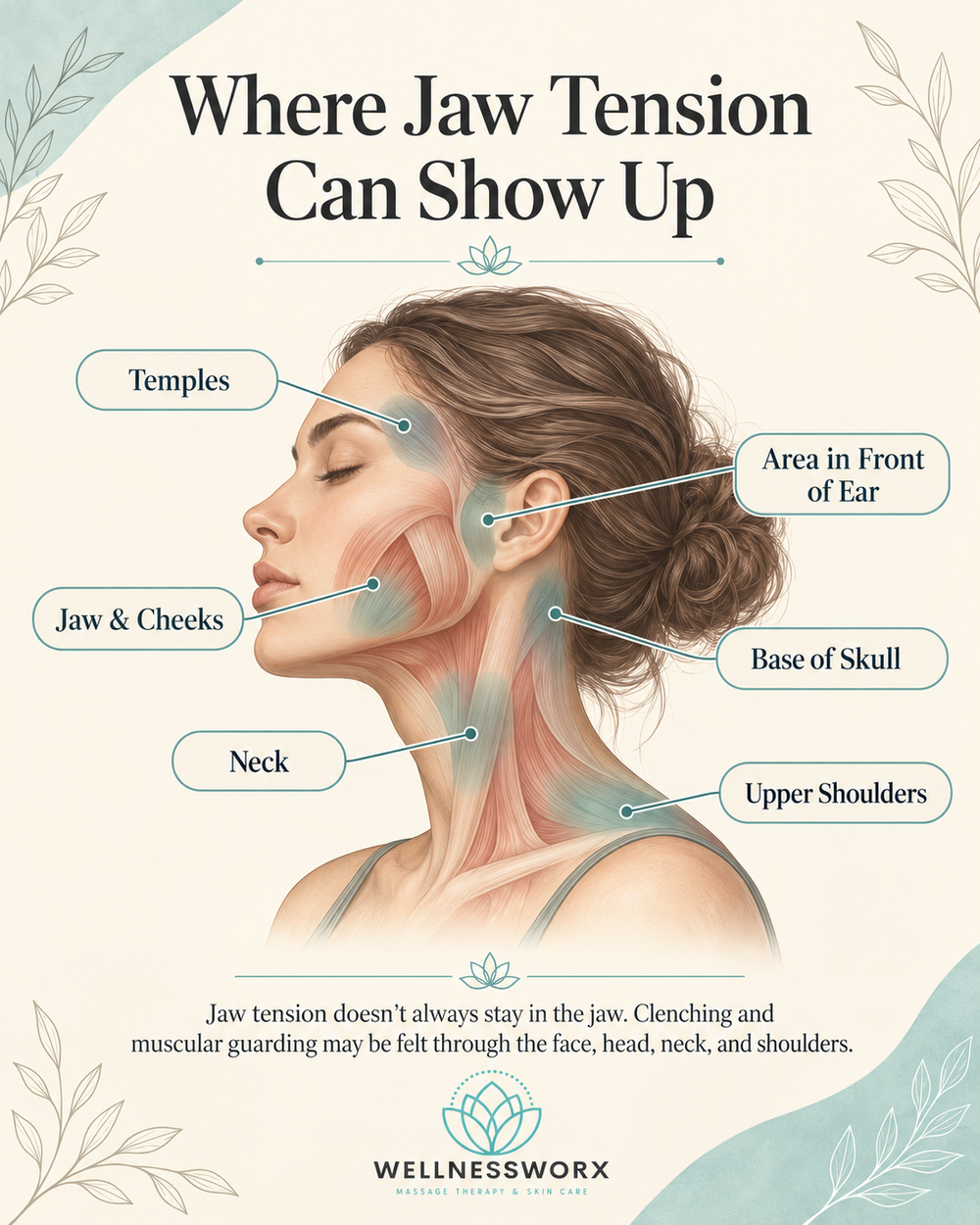
Jaw tension often occurs alongside discomfort elsewhere. People who clench may also notice tightness through the neck, upper shoulders, base of the skull, and upper back.
This is one reason a jaw-focused appointment may involve more than the face itself. Treatment can sometimes include surrounding areas that appear to contribute to the overall muscular pattern.
If your symptoms extend into the upper body, read Neck and Shoulder Pain From Sitting at a Desk: Can Massage Help?
5. It May Support More Comfortable Jaw Movement
When the muscles surrounding the jaw feel tense or guarded, opening the mouth may feel restricted.
Manual-therapy research suggests that certain approaches may improve mouth opening in some people with TMD. The goal is not to aggressively stretch the jaw, but rather to support comfortable movement when muscular tension contributes to restriction.
6. It May Promote Relaxation
Many people notice that they clench their jaw while working, driving, concentrating, feeling stressed, or sleeping.
Massage can provide a period of relaxation while also helping you become more aware of where you habitually hold tension.
If your primary goal is general relaxation rather than focused symptom management, our guide to Medical Massage vs. Spa Massage: What's the Difference? can help explain the difference.
Which Areas Might a Massage Therapist Treat?
Depending on your symptoms and the therapist's training, external massage may include the:
- Jaw muscles
- Cheeks
- Temples
- Muscles surrounding the TMJ area
- Neck
- Base of the skull
- Upper shoulders
- Upper back
Treatment should always remain within the massage therapist's professional training and the client's comfort level.
Does TMJ Massage Hurt?
Massage for jaw tension should not require intense pain. Jaw muscles can be surprisingly tender, especially in people who frequently clench or grind their teeth.
You may experience:
- Gentle pressure
- Mild tenderness
- A stretching sensation
- Awareness of a particularly tight muscle
Tell your therapist immediately if you experience:
- Sharp pain
- Electric sensations
- Increasing headache pain
- Dizziness
- Numbness or tingling
- Suddenly worsening ear symptoms
- Significant jaw pain
- Difficulty opening or closing your mouth
More pressure is not automatically more effective.
Does Jaw Tension Require Deep Tissue Massage?
Not necessarily.
The jaw and facial tissues can be sensitive, and aggressive pressure is not automatically better. Depending on the client, treatment may incorporate gentle massage, sustained moderate pressure, myofascial techniques, trigger-point techniques, neck and shoulder massage, and relaxation-focused techniques.
Treatment should be customized rather than assuming that every person with jaw tension needs deep pressure.
Can Massage Help Teeth Clenching or Grinding?
Massage may help address the muscular consequences of frequent clenching or grinding, including:
- Jaw fatigue
- Tender cheeks
- Temple tension
- Neck tightness
- Muscle-related headaches
However, massage cannot guarantee that bruxism will stop.
Persistent or nighttime grinding should be discussed with a dentist, particularly when there are signs of tooth wear, tooth sensitivity, recurring jaw pain, or morning symptoms.
What About Jaw Clicking or Popping?
Clicking does not automatically mean something is wrong.
According to the National Institute of Dental and Craniofacial Research , TMJ sounds without pain are common and generally do not require treatment.
Clicking or popping should receive additional evaluation when it occurs with:
- Pain
- Jaw locking
- Significant restriction
- Difficulty chewing
- Difficulty opening or closing the mouth
What Happens During a Massage Appointment for Jaw Tension?
Your therapist may begin by asking questions such as:
- Where do you feel the discomfort?
- Do you clench your teeth?
- Do you grind your teeth at night?
- Are your symptoms worse in the morning?
- Does chewing make the discomfort worse?
- Does your jaw click or pop?
- Has your jaw ever locked?
- Do you experience headaches?
- Do your neck and shoulders feel tight?
- Have you already seen a dentist?
- Have you recently had dental work?
- Have you injured your jaw?
- Do you wear a night guard?
The session can then be customized around your symptoms, health history, pressure tolerance, and goals.
You can learn more about WellnessWorx's range of massage therapy and wellness services in Glendora before deciding which type of appointment may be most appropriate.
What Can You Do Between Appointments?
Conservative self-care is often recommended first for many jaw-muscle and TMJ complaints. Depending on the cause of your symptoms and your healthcare provider's recommendations, strategies may include:
- Temporarily choosing softer foods when chewing is uncomfortable
- Using heat or cold when appropriate
- Performing provider-recommended jaw exercises
- Becoming aware of daytime clenching
- Reducing prolonged gum chewing
- Avoiding nail biting
- Taking breaks during prolonged periods of concentration
- Following recommendations from your dentist or physician
A simple awareness cue:
Lips together. Teeth apart. Jaw relaxed.
Your upper and lower teeth generally do not need to remain clenched together while the jaw is at rest.
Can Jaw Tension Contribute to Headaches?
Jaw tension may occur alongside headaches in some people. Muscles involved in chewing extend into the temple region, and clenching may accompany tension through the neck and shoulders.
If headaches are part of your symptoms, read our full guide: Can Massage Help Tension Headaches?
New, severe, rapidly changing, or neurological headache symptoms should not automatically be assumed to come from jaw tension.
When Should You See a Dentist or Doctor?
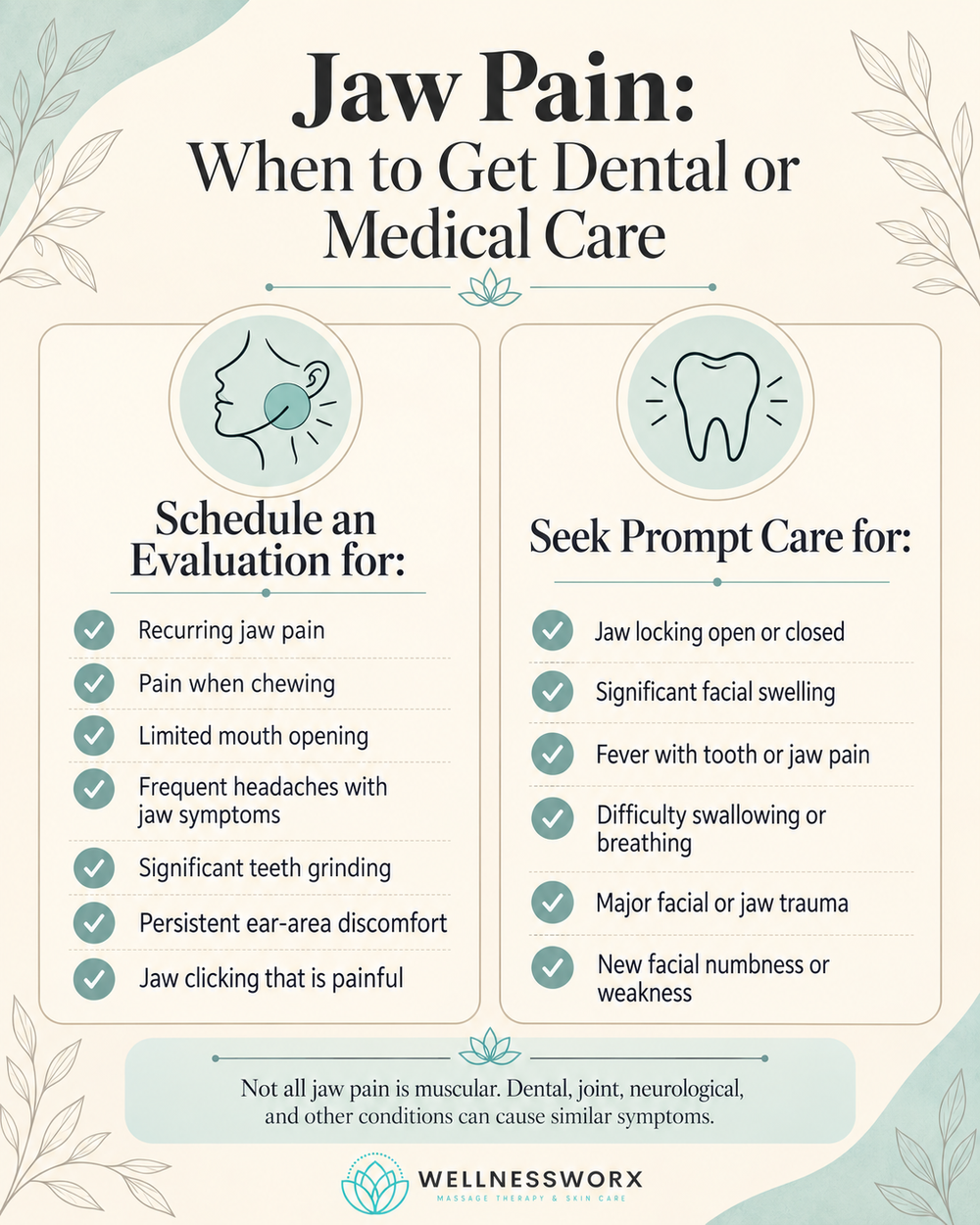
Schedule an appropriate evaluation when:
- Jaw pain persists or repeatedly returns
- Chewing becomes painful
- You cannot comfortably open your mouth
- Your jaw locks
- Symptoms began after trauma
- You have significant tooth pain
- You develop facial or jaw swelling
- You suspect a dental infection
- You have persistent unexplained ear-area discomfort
- Symptoms continue to worsen
Jaw and facial pain can have several causes, and a dentist or medical professional may need to rule out dental, joint-related, neurological, or other conditions before identifying the source.
When Is Jaw or Facial Pain More Urgent?
Seek prompt medical or dental attention for symptoms such as:
- Significant facial swelling
- Fever accompanied by tooth or jaw pain
- Difficulty swallowing
- Difficulty breathing
- Significant facial or jaw trauma
- A jaw that suddenly will not open or close
- Severe or rapidly worsening pain
- New facial numbness or weakness
- A severe headache accompanied by neurological symptoms
Massage should not delay appropriate medical or dental evaluation of these symptoms.
Massage for Jaw, Neck, and Shoulder Tension in Glendora, CA
WellnessWorx Massage Therapy & Skin Care provides personalized therapeutic bodywork in Glendora for clients dealing with muscle tension, headaches, neck and shoulder discomfort, chronic pain, stiffness, and related muscular concerns.
For clients experiencing jaw-related muscle tension, treatment may focus on appropriate external muscles around the jaw and temples while also addressing tension through the neck, shoulders, and upper back when appropriate.
Every session is customized around your symptoms, health history, comfort level, pressure preferences, and wellness goals rather than assuming every jaw complaint has the same cause.
WellnessWorx is located at 1200 E Route 66, Suite 115, Glendora, CA 91740. Call (909) 631-6012 to speak with the team.
Not Sure Which WellnessWorx Service Is Right for You?
Explore all WellnessWorx massage and wellness services or call (909) 631-6012 to discuss your goals.
Frequently Asked Questions
Can massage cure TMJ disorder?
No. Temporomandibular disorders can involve the jaw joint, muscles, or both, and massage cannot correct every possible cause. Massage may help some people manage muscular tension, tenderness, guarding, and related neck or shoulder tightness.
Where does a massage therapist work for jaw tension?
Treatment may include external massage around the jaw muscles, cheeks, temples, neck, shoulders, upper back, and base of the skull. The exact areas should depend on your symptoms, health history, comfort level, and the therapist's training.
Can massage help teeth clenching?
Massage may help reduce muscular tension and soreness associated with clenching, but it cannot guarantee that the clenching itself will stop. Persistent or nighttime grinding should also be discussed with a dentist.
Is it normal for my jaw to click?
Jaw clicking without pain or restricted movement is common and often does not require treatment. Clicking accompanied by pain, locking, or difficulty opening or closing the jaw should be evaluated.
When should I see a dentist instead of getting a massage?
See a dentist or appropriate healthcare professional when jaw pain persists, chewing is painful, the jaw locks, symptoms follow an injury, you have significant tooth pain or facial swelling, or you suspect a dental problem or infection.
This article is provided for general educational purposes and is not intended to diagnose a temporomandibular disorder, dental problem, or other medical condition. Persistent, severe, unexplained, or worsening jaw or facial pain should be evaluated by an appropriate healthcare professional.
