
Medical Massage vs. Spa Massage: What’s the Difference?

Massage can be used for many different reasons. Some people schedule a massage because they want to relax, reduce stress, and enjoy time away from their daily routine. Others are looking for focused help with pain, muscle tension, limited mobility, or recovery from an injury.
That is where the difference between medical massage and spa massage becomes important.
Medical massage is generally a targeted, goal-oriented form of massage therapy focused on a specific physical concern. Spa massage typically places greater emphasis on relaxation, stress relief, and the overall experience. Both can be beneficial, but the right choice depends on what you hope to accomplish during your appointment.
What Is Medical Massage?
Medical massage is a personalized form of therapeutic bodywork designed to address a specific area of pain, tension, restriction, or dysfunction.
Rather than following the same routine during every appointment, the massage therapist evaluates your symptoms, movement limitations, comfort level, health history, and treatment goals. The session is then customized around the areas that need the most attention.
A medical massage session may focus on concerns such as:
Chronic neck or shoulder tension
Lower-back discomfort
Muscle tightness and knots
Limited mobility or flexibility
Repetitive-use strain
Injury recovery
Postural tension
Sciatica-related discomfort
Headaches associated with muscle tension
Ongoing pain that affects daily activities
Depending on your needs, a therapist may incorporate techniques from deep tissue massage, trigger point therapy, myofascial work, stretching, mobility work, or other forms of therapeutic massage.
Research suggests massage therapy may provide short-term relief for certain types of pain, including some neck, shoulder, and lower-back pain. However, results vary, and massage should not be presented as a guaranteed cure for an injury or medical condition.
What Is Spa Massage?
Spa massage is usually designed to create a calming, restorative experience. The primary goals are often relaxation, stress reduction, general tension relief, and overall wellness.
A spa-style massage may include:
Gentle or moderate pressure
Long, flowing massage strokes
A quiet and relaxing environment
Aromatherapy or calming music
General full-body massage
Attention to areas where the client carries everyday tension
Swedish massage is a common example of a relaxation-focused massage. It may still help loosen tight muscles and improve how you feel, but the session is usually less focused on assessing and treating one specific pain pattern.
Massage therapy has been associated with relaxation, reduced stress, and relief from muscle tightness. These benefits can make relaxation massage valuable even when a client is not dealing with a particular injury or chronic pain concern.
Medical Massage vs. Spa Massage: The Main Differences
Although both services involve hands-on massage therapy, their purpose and structure can be different.
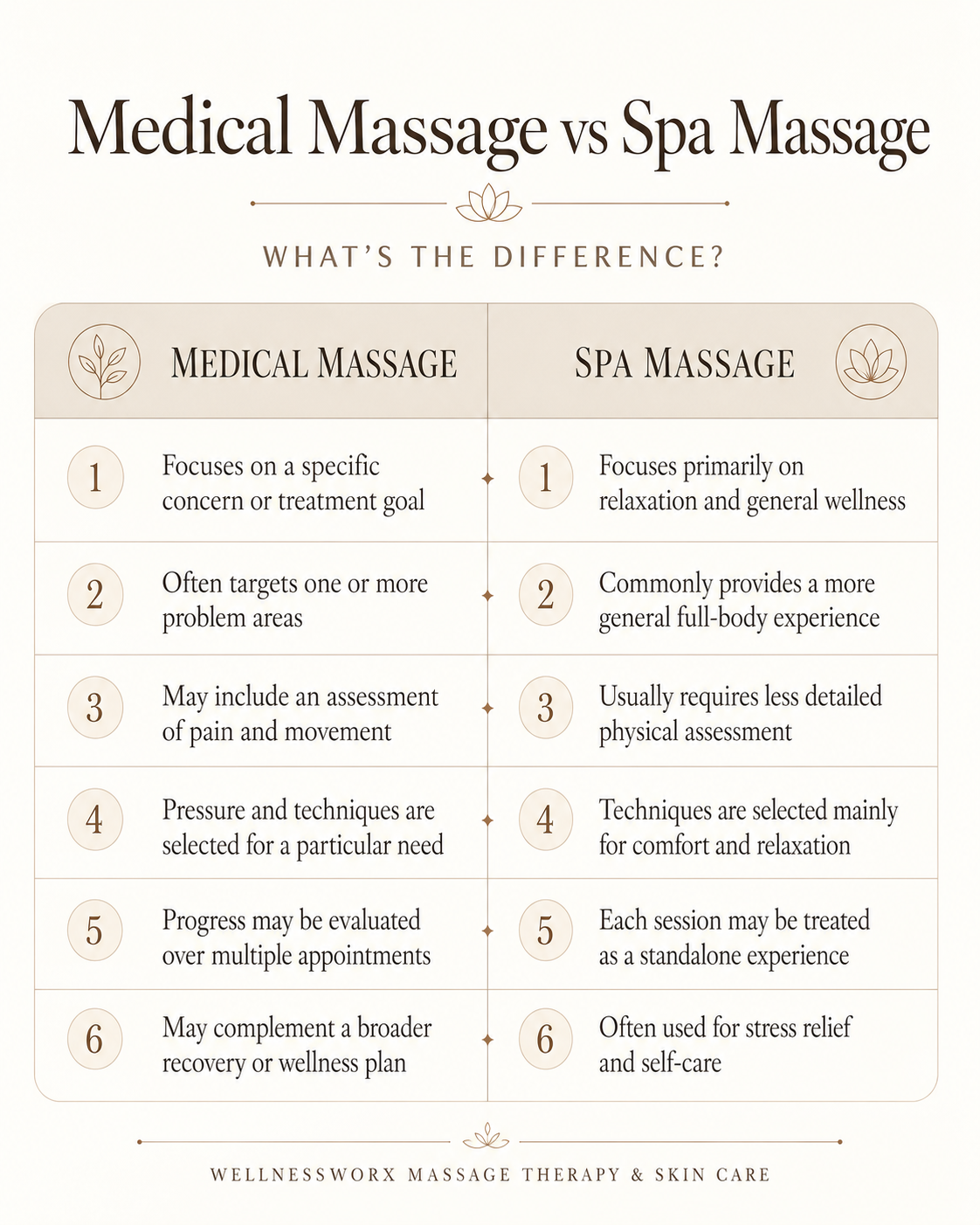
The two approaches are not always completely separate. A medical massage can still feel relaxing, and a spa massage may still reduce muscle tension. The biggest difference is usually the primary goal of the appointment.
Is Medical Massage the Same as Deep Tissue Massage?
Medical massage and deep tissue massage are not exactly the same.
Deep tissue massage is a specific approach that uses slow, focused pressure to reach deeper layers of muscle and connective tissue. Medical massage describes the overall purpose of the treatment rather than one particular technique.
A medical massage therapist may use deep tissue techniques when appropriate, but deeper pressure is not always necessary. The therapist may instead use lighter pressure, stretching, trigger point therapy, myofascial techniques, or mobility work.
The treatment should be based on what your body needs—not on the assumption that more pressure will always produce better results.
You can learn more about how deeper pressure is used on our Deep Tissue Massage page.
What Happens During a Medical Massage Appointment?
A medical massage appointment usually begins with a conversation about what you are experiencing.
Your therapist may ask about:
Where you feel pain or tension
How long the problem has been present
Movements or activities that make it feel better or worse
Previous injuries or surgeries
Your work, exercise, or daily activities
Medications or medical conditions that may affect treatment
Your goals for the appointment
Your therapist may also observe your range of motion or ask you to describe how the discomfort affects your daily life.
The massage itself is then focused on the muscles and soft tissues connected to your concern. Your therapist should communicate with you about pressure, tenderness, positioning, and comfort throughout the session.
At WellnessWorx, each medical massage therapy session is customized to the client rather than following a one-size-fits-all routine.
Does Medical Massage Need to Hurt to Be Effective?
No. Effective medical massage does not have to be unbearably painful.
Some areas may feel tender, particularly when a therapist is working around tight muscles or sensitive trigger points. However, excessive pain can cause your body to tense up, making the session less productive and potentially increasing discomfort.
Your therapist should adjust the pressure based on:
Your comfort level
The area being treated
Your health history
The techniques being used
How your body responds during the session
Communication is an important part of treatment. You should always tell your therapist when the pressure feels too intense, causes sharp pain, or creates numbness or tingling.
Who May Benefit From Medical Massage?
Medical massage may be worth considering when tension, discomfort, or restricted movement is interfering with your daily routine.
It may be appropriate for someone who:
Experiences recurring muscle tension
Has pain related to posture or repetitive activity
Is recovering from certain injuries
Feels restricted when turning, bending, or reaching
Has muscle soreness related to work or exercise
Wants focused treatment rather than a general massage
Is managing an ongoing pain condition with guidance from a healthcare provider
Massage therapy is often used as a complementary approach, meaning it may be provided alongside—not instead of—care from a physician, physical therapist, chiropractor, or other healthcare professional.
When Should You Choose a Spa Massage?
A relaxation-focused massage may be the better fit when your main goals are to:
Reduce everyday stress
Relax your body and mind
Enjoy a quiet self-care experience
Relieve mild, general muscle tension
Feel refreshed without addressing a specific injury
Maintain an ongoing wellness routine
You do not need to be experiencing significant pain to benefit from massage therapy. Relaxation and stress management are worthwhile reasons to schedule an appointment.
Our Massage Therapy page provides more information about personalized massage options for relaxation, tension relief, mobility, and general wellness.
When Should You Speak With a Doctor First?
Massage is generally considered low risk when performed by a properly trained professional, but it is not appropriate for every person or every condition.
Speak with your healthcare provider before receiving massage if you have:
A recent serious injury or surgery
A suspected blood clot
A bleeding disorder or take blood-thinning medication
A fracture or severe osteoporosis
An active infection, fever, or contagious skin condition
An unexplained lump or swelling
Severe or rapidly worsening pain
New numbness, weakness, or loss of coordination
A medical condition that may require treatment modifications
You should also tell your massage therapist about medications, previous surgeries, implanted medical devices, allergies, and any other important health information. Mayo Clinic advises clients to discuss their medical history and obtain provider approval when massage is being used for a medical condition.
Massage therapists do not diagnose medical conditions. New, severe, unexplained, or worsening symptoms should be evaluated by an appropriate healthcare provider.
Which Type of Massage Is Right for You?
The right massage depends on the reason you are scheduling your appointment.
Choose a relaxation or spa-style massage when your main priority is stress reduction, general tension relief, and self-care.
Consider medical massage when you want a more focused session addressing pain, muscle tightness, restricted movement, injury recovery, or another specific concern.
You do not necessarily need to know which technique you need before scheduling. A knowledgeable massage therapist can discuss your symptoms and goals and recommend an approach based on your individual needs.
Personalized Medical Massage in Glendora, CA
WellnessWorx Massage Therapy & Skin Care provides personalized medical massage in Glendora, California, for clients experiencing chronic pain, muscle tension, injury-related discomfort, and limited mobility.
Our experienced massage therapists take the time to understand what you are feeling and customize each session around your body, comfort level, and wellness goals. Whether you need focused therapeutic work or simply want help deciding which service is right for you, our team is here to help.
Request an appointment or call (909) 631-6012 to learn more about medical massage in Glendora.
This article is provided for general educational purposes and is not intended to diagnose or treat a medical condition. Consult an appropriate healthcare provider regarding new, severe, or unexplained symptoms.
Frequently Asked Questions
-
The biggest difference is the primary goal of the appointment. Medical massage is focused on a specific concern such as pain, muscle tension, limited mobility, or injury recovery. Spa massage is typically focused on relaxation, stress relief, and general wellness.
-
Many clients can schedule medical massage without a referral. However, a referral or medical clearance may be necessary when massage is connected to a recent surgery, serious injury, complex medical condition, insurance benefit, or outside treatment plan. Contact the clinic and your healthcare provider when you are unsure.
-
Medical massage is not supposed to be unbearably painful. Some areas may feel tender when tight or sensitive tissue is treated, but your therapist should adjust the pressure and techniques to your comfort level. Sharp, intense, or worsening pain should be communicated immediately.
-
The number of appointments depends on your symptoms, health history, goals, and how your body responds. Some clients schedule a single session for a specific concern, while others benefit from a series of appointments followed by less frequent maintenance visits. Your therapist can recommend a plan after learning more about your needs.
-
No. Medical massage may complement care from a physician, physical therapist, chiropractor, or other healthcare professional, but it should not replace medically necessary evaluation or treatment. New, severe, unexplained, or worsening symptoms should be evaluated by an appropriate healthcare provider.
