
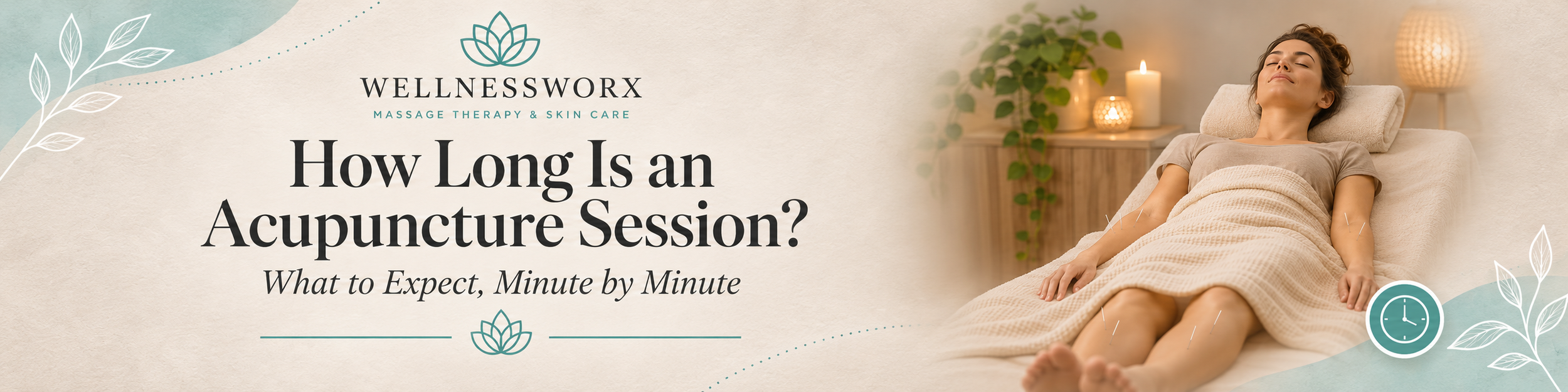
If you're new to acupuncture, it helps to know how much time to block off. The good news: it fits easily into a lunch break or an evening after work, and most of that time is spent lying down, relaxing.
Here's how long a typical acupuncture session lasts, why your first visit takes longer, and what actually happens while you're on the table.
The Short Answer
First appointment: usually 60–90 minutes, because it includes a full intake and conversation about your health.
Follow-up sessions: usually 30–60 minutes.
Needle time: the needles typically stay in for about 15–30 minutes of that.
At WellnessWorx: Plan for about 60 minutes for your first visit, which includes your consultation, and about 45 minutes for follow-up sessions.
Why Your First Visit Takes Longer
Your first appointment is about getting to know you before any needles come out. At WellnessWorx, Sharon Chen, L.Ac., will start by asking about:
What's bothering you, how long it's been going on and what makes it better or worse
Your health history, medications and any past injuries or surgeries
Sleep, stress, digestion and energy, since these often connect to the main complaint
Your goals: what feeling better would actually look like for you
Sharon may also check your pulse and look at your tongue, which are traditional parts of an acupuncture assessment. All of this shapes your treatment plan and gives you a sense of how many sessions to expect.
Tip: arrive 10 minutes early to fill out paperwork, and bring a list of your medications.
What Happens During a Session, Step by Step
Here's roughly how a follow-up session breaks down:
Check-in (5–10 minutes): how you've felt since last time
Getting comfortable and placing the needles (about 5 minutes)
Resting with the needles in (15–30 minutes)
Removing needles and wrap-up (about 5 minutes)
Altogether, that's about 30–60 minutes.
Check-in. Sharon asks what's changed since your last visit and adjusts the plan.
Needle placement. The needles are very thin, much thinner than the needle used for a shot or blood draw. Most people feel a tiny pinch or nothing at all, sometimes followed by a dull ache, warmth or tingling at the point. A typical treatment uses somewhere around 5 to 20 needles, and the points aren't always where it hurts.
Resting. This is the part most people end up loving. You'll lie still in a quiet, dim room while the needles do their work. Many people drift off. Common practice is to leave needles in for about 20–30 minutes, though some treatments are shorter.
Removal. Taking the needles out is quick and usually painless.
What Can Make a Session Shorter or Longer
What you're treating. A focused issue like a stiff neck may need fewer points and less time than several overlapping concerns.
Add-on techniques. Electroacupuncture (a gentle current through the needles), ear acupuncture, cupping or heat therapy can change the length of your visit. You can read more about each technique on our acupuncture page.
Pairing with massage. If you combine acupuncture with chronic pain massage therapy, plan for the combined time. At WellnessWorx, many clients pair the two as part of one plan; ask about it during your consultation.
Your treatment plan. Sharon tailors each session to your symptoms and goals, so needle time and check-in time may vary a little from visit to visit.
How to Get the Most Out of Your Session
Eat a light meal one to two hours before. Don't come in starving or overly full.
Wear loose, comfortable clothes that roll up easily past your knees and elbows.
Skip the caffeine and alcohol right before your appointment if you can.
Tell Sharon if you're pregnant, have a pacemaker, take blood thinners or have a bleeding disorder.
Plan a calm hour afterward. Many people feel relaxed or a little sleepy. Drink water and avoid an intense workout right after.
How Often Will You Need to Come In?
Session length is only half the picture. Most treatment plans start with one or two sessions a week, and a common course for one main concern is about 6 to 8 treatments. Recent issues often improve in fewer visits, while chronic pain can take longer.
For a full breakdown, see our guide: How Long Does Acupuncture Take to Work?
Book Acupuncture in Glendora
At WellnessWorx, acupuncture is performed by Sharon Chen, L.Ac., a licensed acupuncturist with nearly seven years of experience specializing in orthopedics and pain management. Whether you're dealing with chronic tension, stress or nagging pain, Sharon will walk you through exactly what to expect at your first visit, including how long it will take. We accept FSA and HSA cards.
Request your acupuncture appointment or call (909) 631-6012. We're at 1200 E Route 66, Suite 115 in Glendora, an easy drive if you're coming from La Verne, and we're open Monday through Sunday, 9am to 8pm.
Frequently Asked Questions
How long are acupuncture needles left in?
Usually about 15–30 minutes, with 20–30 minutes being common practice. Some treatments use shorter retention depending on the technique and what's being treated.
How long is a first acupuncture appointment?
Most first visits run 60–90 minutes. At WellnessWorx: Plan for about 60 minutes for your first visit, which includes your consultation, and about 45 minutes for follow-up sessions.
Is a longer acupuncture session better?
Not necessarily. Leaving the needles in longer doesn't automatically mean better results. Sharon will choose the right length for your treatment. Consistency over several sessions matters more than any single long one.
Can I go back to work after acupuncture?
Yes. There's no downtime, and you can drive yourself home. Some people feel very relaxed, so if you can, schedule a little breathing room afterward.
Does acupuncture hurt?
Most people feel very little. You may notice a quick pinch, then a dull ache, warmth or heaviness at the point, which usually fades as you relax. Let Sharon know if anything feels uncomfortable.
This article is for general information and isn't medical advice. Talk with your doctor about whether acupuncture is right for you.