
Can Massage Help Sciatica? What You Should Know

Sciatica can cause pain that begins in the lower back or buttock and travels down the leg. Depending on the source and severity of the irritation, someone may also experience burning, tingling, numbness, or weakness. Massage therapy may help reduce some of the muscle tension, guarding, and stiffness that can accompany sciatica. However, massage does not remove a herniated disc, correct spinal narrowing, or directly eliminate pressure on a nerve root. Because sciatica is a nerve-related symptom rather than simply a tight muscle, the first step is understanding what may be causing it. Once serious concerns have been ruled out, personalized massage may be used alongside medical care, exercise, physical therapy, and other appropriate treatments to support comfort and movement.
What Is Sciatica?
Sciatica refers to symptoms caused by irritation, inflammation, compression, or injury involving the sciatic nerve or the nerve roots that form it. The sciatic nerve is the body’s largest nerve. It begins with nerve roots in the lower spine and travels through the buttock and down the back of each leg. Sciatica typically affects one side of the body, although symptoms can occasionally occur on both sides. Sciatica is not a condition by itself. It is a group of symptoms caused by an underlying problem affecting the nerve.
What Does Sciatica Feel Like?
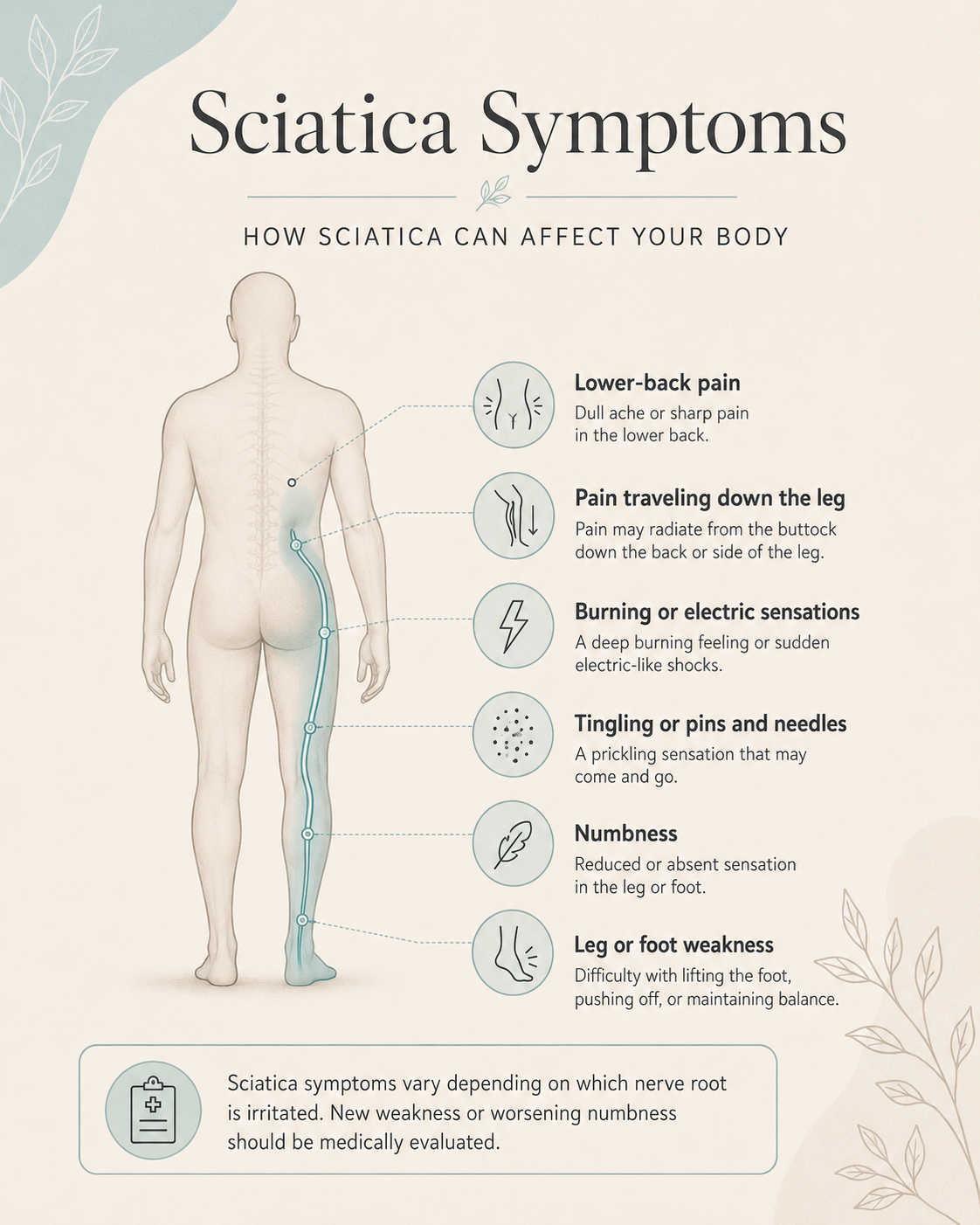
Sciatica symptoms can vary from mild irritation to severe pain that interferes with sitting, walking, sleeping, or working.
Common symptoms include:
Pain in the lower back or buttock
Pain that travels down the back or side of the leg
Burning or electric-shock sensations
Tingling or pins and needles
Numbness
Leg or foot weakness
Pain that worsens with certain movements or prolonged sitting
Difficulty walking comfortably
The discomfort may extend into the calf, foot, or toes. Because sciatica involves the nervous system, symptoms such as numbness and weakness deserve particular attention rather than being treated as ordinary muscle tightness.
What Causes Sciatica?
Sciatica commonly develops when a nerve root in the lower spine is compressed or irritated.
Potential causes include:
A herniated disc
Spinal stenosis
Bone spurs
Degenerative changes in the spine
Injury affecting the lower back
Spondylolisthesis, in which one vertebra moves out of position
Pregnancy-related pressure or postural changes
Less common growths, infections, or neurological conditions
A herniated disc in the lower back can cause pain extending through the buttock, thigh, calf, or foot when it presses on a nearby nerve. Symptoms resembling sciatica can also occur when muscles around the hip and buttock irritate the nerve. Piriformis syndrome, for example, may produce buttock pain, tingling, numbness, and pain that becomes worse with prolonged sitting or activity. Not every case of back, hip, or leg pain is true sciatica. A healthcare professional can help determine whether symptoms are coming from a spinal nerve, muscle, joint, or another source.
Can Massage Help Sciatica?
Massage may help some people manage the muscular and soft-tissue symptoms surrounding sciatica, especially when tension, guarding, or restricted movement are contributing to discomfort.
Potential goals may include:
Reducing tightness around the lower back and hips
Calming protective muscle guarding
Making gentle movement feel more comfortable
Addressing muscles that are compensating for pain
Supporting relaxation and rest
Complementing a broader rehabilitation plan
However, research on massage specifically for sciatica is limited. Reviews of massage for lower-back pain have found only weak or low-strength evidence of benefit, and the available research has not established one massage technique as clearly superior.
Massage should therefore be presented as supportive care—not as a guaranteed cure for sciatica.
What Massage Can and Cannot Do
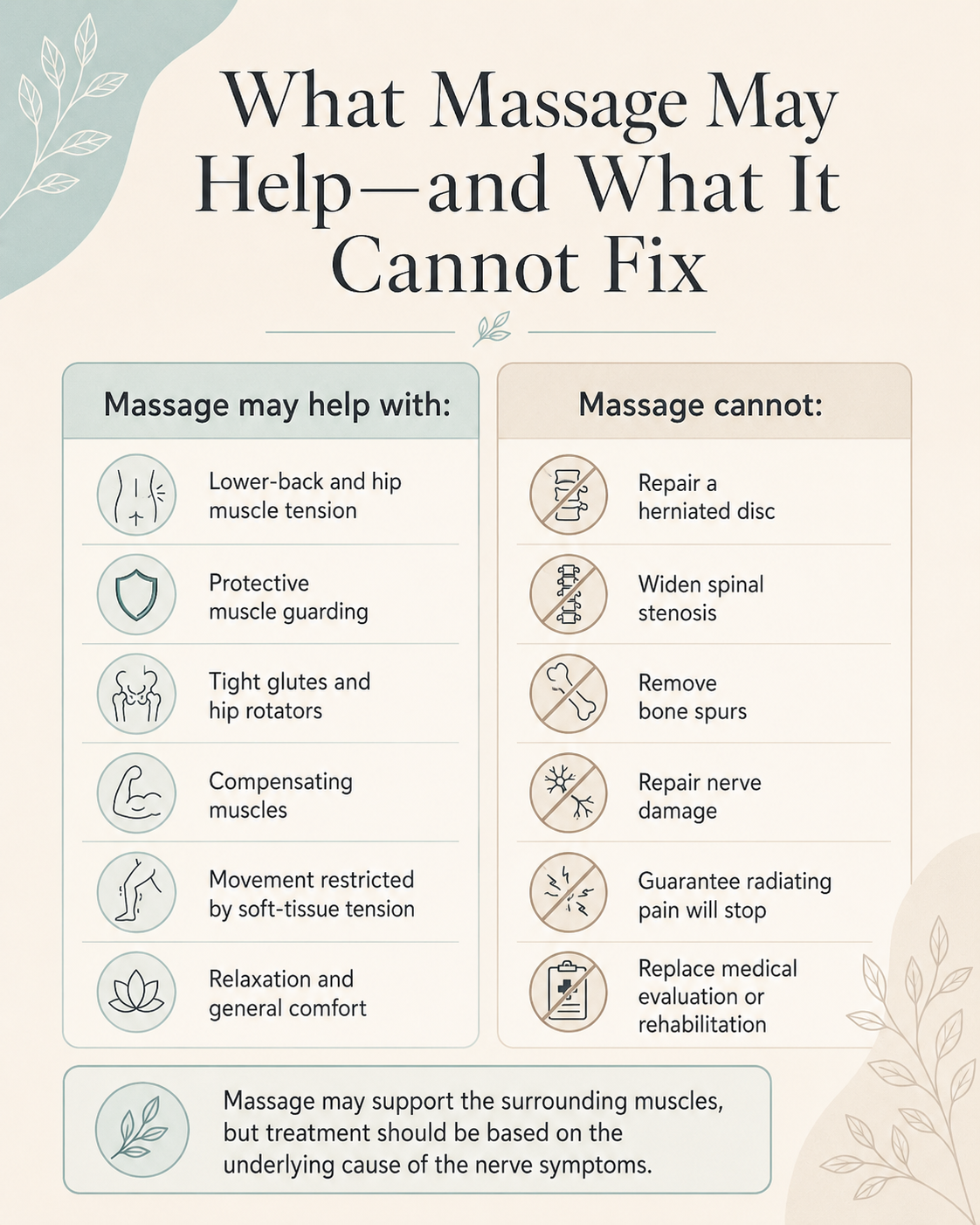
Massage may help:
Tight or overworked muscles
Muscle guarding around a painful area
Hip and glute tension
Lower-back stiffness
General stress associated with ongoing discomfort
Movement restrictions connected to soft-tissue tension
Massage cannot:
Push a herniated disc back into place
Widen a narrowed spinal canal
Remove a bone spur
Repair nerve damage
Guarantee that radiating pain will stop
Replace medically necessary imaging, physical therapy, medication, injections, or surgery
The treatment plan should be based on the source of the symptoms—not only on where the pain is felt.
How May Massage Support Someone With Sciatica?
1. It May Reduce Muscle Guarding
When a nerve becomes irritated, the muscles around the lower back, hips, and buttocks may tighten protectively. Although guarding may initially help someone avoid painful movement, prolonged tightness can contribute to stiffness and make ordinary activities feel more difficult. Carefully selected massage techniques may help some of these surrounding muscles relax. The therapist should avoid assuming that the tightest or most painful location is necessarily the source of the nerve irritation.
2. It May Address Compensating Muscles
Someone with sciatica may change the way they stand, walk, sit, or move to avoid pain.
These movement changes can place additional demand on muscles around the:
Lower back
Hips
Glutes
Thighs
Calves
Opposite side of the body
Massage may help address some of this secondary muscle tension while the underlying sciatica is managed through an appropriate care plan.
3. It May Make Movement Feel More Comfortable
Sciatica can make bending, walking, getting out of a chair, or changing positions uncomfortable. Massage may make certain movements feel easier when soft-tissue tension is contributing to the restriction. It should not be used to force the back, hip, or leg through a painful range of motion. Physical therapy and appropriate exercise are commonly used in sciatica treatment to improve flexibility, strengthen the muscles supporting the back, and support continued activity. Massage may complement those efforts but does not replace them.
4. It May Promote Relaxation
Nerve pain can be difficult to ignore. Persistent discomfort may affect sleep, concentration, activity levels, and the ability to relax. Massage may provide a calming experience and help reduce generalized muscle tension. Relaxation does not resolve the underlying nerve compression, but it may still be valuable within a broader pain-management approach.
Which Areas May a Massage Therapist Address?
Depending on the cause of the symptoms and the client’s tolerance, massage may focus on muscles around the:
Lower back
Sacrum
Glutes
Outer hips
Hip rotators
Hamstrings
Thighs
Calves
The therapist may also address muscles on the opposite side if they are compensating for an altered walking or standing pattern. Directly pressing hard into the most painful area is not always the best approach. If pressure increases radiating pain, numbness, tingling, burning, or weakness, the technique should be adjusted or stopped.
What Massage Techniques May Be Used?
A personalized sciatica massage appointment may include:
Gentle therapeutic massage
Myofascial techniques
Trigger-point work
Light or moderate deep-tissue techniques
Gentle assisted stretching
Mobility-focused bodywork
Relaxation techniques
Focused work around the hips and glutes
The most appropriate techniques depend on the diagnosis, current symptoms, sensitivity, medical history, and treatment goals. WellnessWorx provides customized medical massage, deep-tissue massage, chronic pain massage, and mobility-focused services in Glendora rather than relying on one standard routine for every client.
Is Deep-Tissue Massage Good for Sciatica?
Deep-tissue massage may help when deeper muscle tension is contributing to discomfort, but more pressure is not automatically better. Someone experiencing active nerve irritation may be highly sensitive. Aggressive pressure around the lower back, buttock, or leg could increase symptoms rather than relieve them.
A therapist may begin with lighter or moderate pressure and gradually adjust based on how the client responds. Deep-tissue techniques should be avoided or modified when they cause:
Sharp pain
Burning
Electric sensations
Increased tingling
New numbness
Pain traveling farther down the leg
Muscle weakness
Medical massage describes the purpose and customization of the session. It does not mean that every appointment must involve intense pressure.
Does Sciatica Massage Need to Hurt?
No. Massage for sciatica does not need to cause severe pain to be effective. Some tight muscles may feel tender during focused work. However, the therapist should not attempt to “work through” intense nerve symptoms.
Pressure should remain tolerable and should be adjusted according to:
The location of the symptoms
Whether pain travels down the leg
Current sensitivity
Your diagnosis
Medications
Previous surgeries or injuries
Your response during the session
Pain that becomes sharper, travels farther down the leg, or is accompanied by increasing numbness or weakness should not be treated as productive discomfort.
Should You See a Doctor Before Getting a Massage?
Medical evaluation is especially important when:
Symptoms are new
The pain is severe
Pain travels below the knee
Numbness or tingling is increasing
The leg or foot feels weak
Symptoms began after a fall or accident
Pain continues or repeatedly returns
You are unsure whether the problem is truly sciatica
You have a history of spinal surgery or a complex medical condition
A physical examination may include strength, reflex, sensation, movement, and leg-raising assessments. Imaging is not always required, but it may be ordered when symptoms are severe, long-lasting, or accompanied by concerning findings.
Massage therapists do not diagnose herniated discs, spinal stenosis, nerve damage, or other neurological conditions.
When Is Sciatica an Emergency?
Seek urgent medical care when back or leg symptoms are accompanied by:
Loss of bladder or bowel control
Difficulty urinating
Severe or rapidly worsening leg weakness
Numbness around the inner thighs, groin, or saddle area
Difficulty walking or maintaining balance
Symptoms affecting both legs
Fever or chills
Severe pain following trauma
A history of cancer with new back or leg symptoms
Severe weakness and loss of bladder or bowel control can indicate serious nerve compression requiring prompt medical attention.
Do not schedule massage as the first response to these symptoms.
What Happens During a Sciatica Massage Appointment?
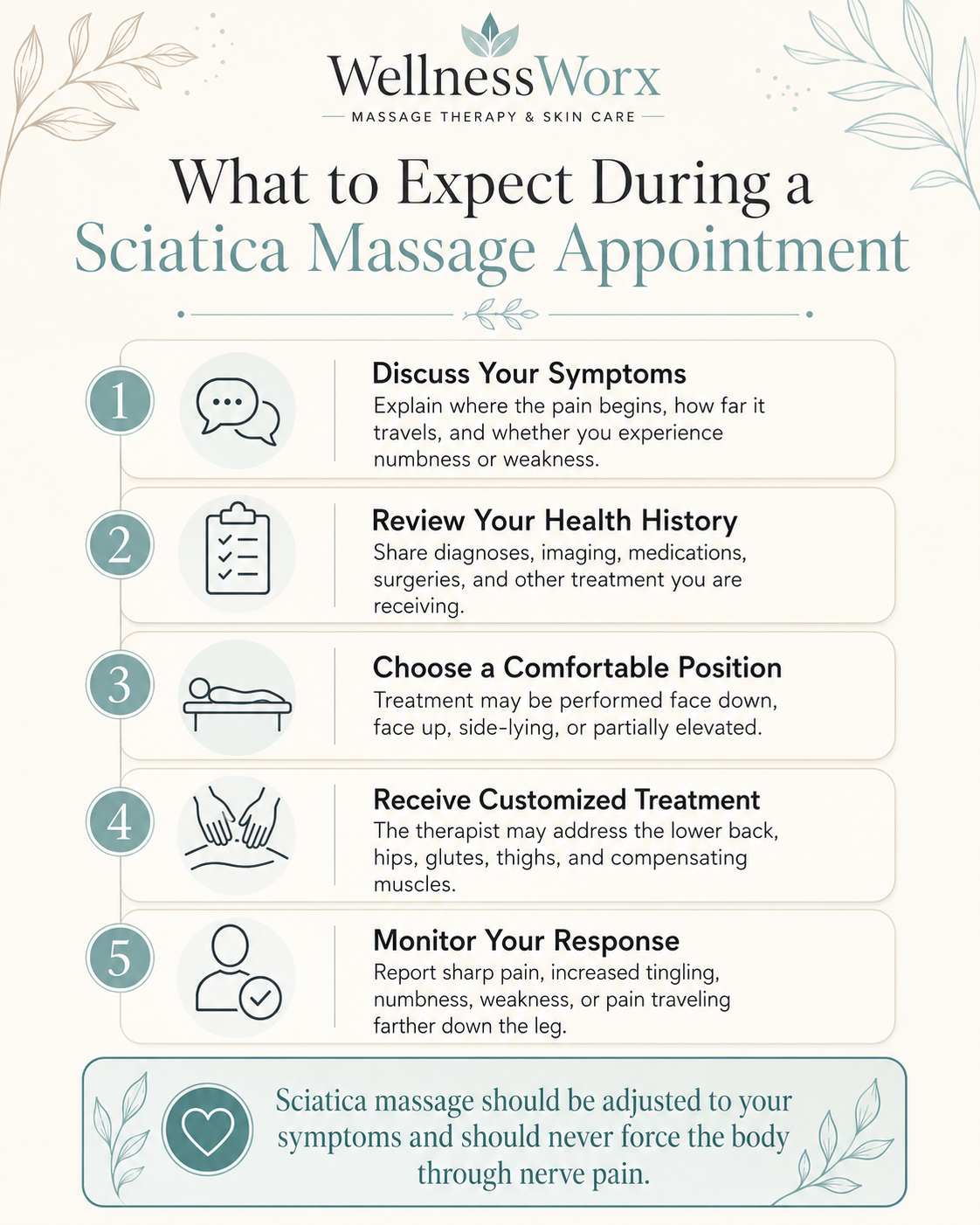
The appointment should begin with a detailed conversation about your symptoms.
Your therapist may ask:
Where the pain begins
How far it travels down the leg
Whether you experience numbness or tingling
Whether the leg or foot feels weak
Which positions worsen or relieve symptoms
How long the symptoms have been present
Whether you have received a diagnosis
Whether imaging has been performed
What medications you are taking
Whether you are receiving physical therapy or other treatment
Which daily activities are difficult
What you hope to improve
The therapist may position you face down, face up, side-lying, or partially elevated depending on your comfort. Pillows and bolsters can reduce strain and help you remain supported.
Treatment should be adjusted continuously based on your response.
How Many Sessions Will You Need?
There is no standard number of massage sessions for sciatica.
The appropriate plan depends on:
The source of the symptoms
Symptom severity
How long the problem has been present
Your response to massage
Other treatment you are receiving
Your movement and activity goals
Whether symptoms are improving, unchanged, or worsening
Some clients may experience temporary relief after one appointment, while others may benefit from a short series of customized sessions. Massage should be reassessed when it is not producing meaningful changes in comfort or function. No therapist should promise that a specific number of appointments will cure sciatica.
Can Stretch Therapy Help?
Gentle stretching may be useful when shortened or guarded muscles around the hips and legs are contributing to restricted movement. However, stretching should not be aggressive or performed in a way that increases radiating pain, tingling, or numbness. A stretch that feels appropriate for ordinary muscle tightness may not be suitable for an irritated nerve. Stretch therapy should therefore be adapted to the person’s diagnosis, mobility, and medical guidance.
What Can You Do Between Appointments?
Follow the recommendations of your healthcare provider or physical therapist.
Depending on the cause of the symptoms, an appropriate plan may include:
Remaining gently active as tolerated
Changing positions regularly
Avoiding prolonged bed rest
Completing prescribed exercises
Using heat or cold when recommended
Improving sitting or workstation support
Avoiding movements that clearly worsen nerve symptoms
Tracking numbness, weakness, and changes in pain
For many people with back pain, prolonged bed rest is not recommended, and appropriately selected activity may be part of recovery.
Massage for Sciatica-Related Discomfort in Glendora, CA
WellnessWorx Massage Therapy & Skin Care provides personalized massage therapy in Glendora for clients experiencing lower-back tension, hip tightness, restricted movement, chronic discomfort, and sciatica-related symptoms.
Every appointment is customized around your health history, current symptoms, pressure preference, mobility, and goals. Depending on your needs, treatment may include medical massage, deep-tissue techniques, targeted therapeutic work, stretching, mobility-focused bodywork, or gentler relaxation techniques.
To ask whether massage may be appropriate for your sciatica-related discomfort, contact WellnessWorx at (909) 631-6012.
This article is provided for general educational purposes and is not intended to diagnose sciatica, identify the cause of nerve symptoms, or replace medical care. New, severe, unexplained, or worsening neurological symptoms should be evaluated by an appropriate healthcare professional.
Frequently Asked Questions
-
No. Massage cannot be guaranteed to cure sciatica or remove pressure caused by a herniated disc, spinal stenosis, bone spur, or another structural issue. It may help reduce surrounding muscle tension, guarding, stiffness, and discomfort as part of a broader care plan.
-
Treatment may focus on muscles around the lower back, hips, glutes, thighs, and legs. The exact areas depend on your symptoms and diagnosis. The therapist should avoid aggressive pressure that increases radiating pain, numbness, tingling, or weakness.
-
Deep-tissue massage may be appropriate for certain muscular contributors, but it is not right for everyone. Pressure should be customized and reduced if it worsens nerve symptoms. Lighter therapeutic techniques may be more appropriate during a sensitive flare.
-
Yes, symptoms may worsen if excessive pressure is used, the nerve is highly irritated, or treatment is directed at an undiagnosed condition. Stop and tell your therapist if pain becomes sharp, travels farther down the leg, or is accompanied by increased numbness, tingling, or weakness.
-
Medical evaluation is recommended when symptoms are new, severe, persistent, worsening, or accompanied by numbness or weakness. Seek urgent care for loss of bladder or bowel control, rapidly worsening weakness, difficulty walking, or numbness around the groin or inner thighs.
