
Can Cupping Help Tight Muscles & Limited Mobility?
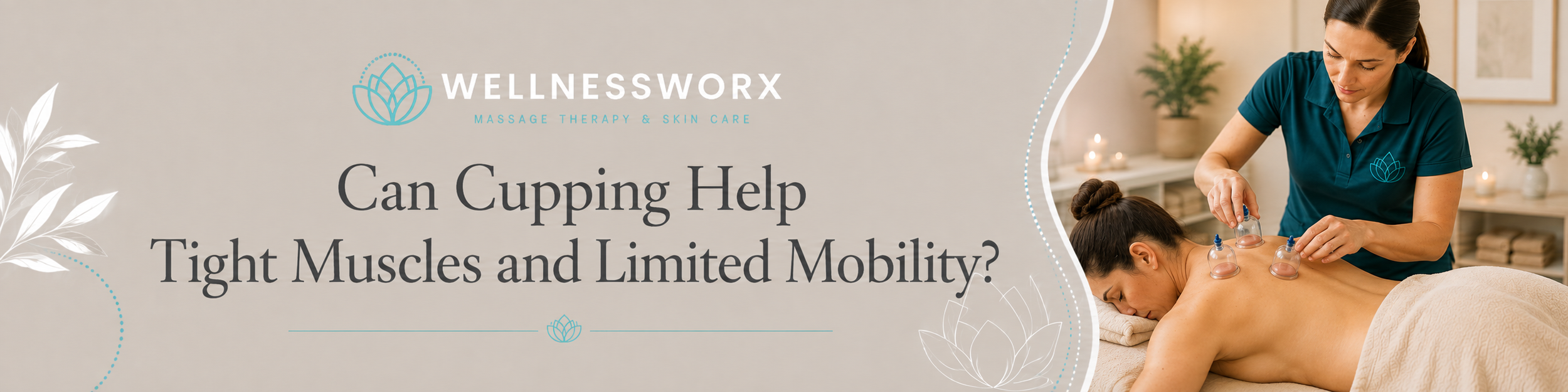
When muscles feel persistently tight, stretching and massage may help—but some people find that certain areas still feel restricted, stiff, or difficult to move comfortably.
Cupping therapy is another form of therapeutic bodywork that may be used to address muscle tension and movement restrictions. Instead of pressing down into the muscles, cupping uses suction to gently lift the skin and underlying soft tissue.
At WellnessWorx Massage Therapy & Skin Care, cupping therapy may be used for clients dealing with muscle tension, stiffness, limited mobility, postural strain, workout soreness, and recovery-related discomfort. It may also be combined with massage therapy as part of an individualized treatment plan.
Research into cupping is still developing. Some studies suggest that dry cupping may provide short-term benefits for musculoskeletal pain and range of motion, but the overall quality of evidence remains limited. Cupping is best viewed as a complementary treatment rather than a guaranteed solution for pain or mobility problems.
What Is Cupping Therapy?
Cupping therapy uses specialized cups placed against the skin to create negative pressure, or suction.
Traditional cups may be made from glass, while modern treatments frequently use plastic or silicone cups. The suction gently lifts the skin and superficial tissues upward into the cup rather than compressing them downward.
Cupping techniques may include:
Static cupping: Cups remain in one location for several minutes.
Moving or gliding cupping: Lotion or oil is applied so the therapist can gently move the cups across the skin.
Combination treatment: Cupping is incorporated into a massage session along with other therapeutic techniques.
At WellnessWorx, cupping is used as a therapeutic bodywork technique intended to decompress tight areas and support movement and recovery.
This article focuses primarily on dry cupping, which does not involve piercing the skin.
How Is Cupping Different From Massage?
Both massage and cupping work with the body's soft tissues, but they use very different types of pressure.
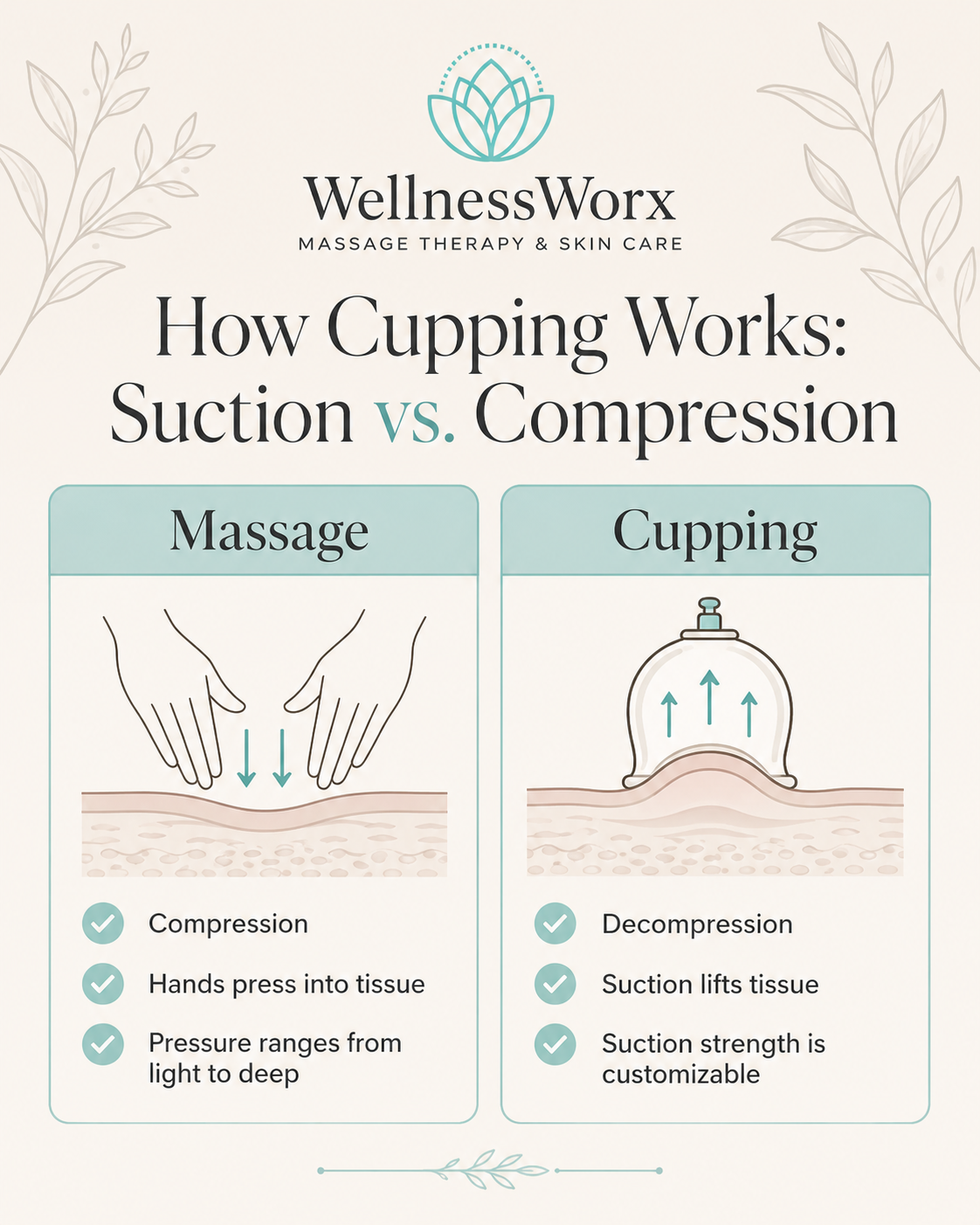
One technique is not necessarily better than the other.
For some clients, combining them allows the therapist to approach an area in different ways: massage provides compression and manual movement, while cupping provides decompression and suction.
Why Do Muscles Feel Tight?
Muscles can feel tight for many reasons.
Common contributors may include:
Repetitive activity
Long periods of sitting
Computer or phone use
Exercise or sports
Physical work
Protective muscle guarding
Previous injuries
Reduced activity
Stress
Postural strain
Compensating for another painful area
The sensation of tightness does not always mean that a muscle is physically shortened. Pain sensitivity, fatigue, nervous-system activity, joint restriction, and other factors may also contribute.
Persistent or unexplained tightness—particularly when accompanied by weakness, numbness, swelling, or severe pain—should be medically evaluated rather than assumed to be a simple muscle problem.
Can Cupping Help Tight Muscles?
Possibly.
Some people report feeling less tight or restricted after cupping therapy. The suction may create a stretching or lifting sensation across the treated tissues, which can feel very different from traditional massage.
Potential goals of cupping for muscle tension may include:
Helping an area feel less restricted
Reducing the sensation of muscular tightness
Supporting short-term pain relief
Improving comfort during movement
Addressing postural or repetitive-use strain
Helping prepare tissue for other massage techniques
A 2020 systematic review examining 21 randomized trials found low-quality evidence that dry cupping reduced pain in people with chronic neck and nonspecific lower-back pain. The researchers also found some evidence of improved range of motion but concluded that stronger studies were needed before definitive conclusions could be made.
NCCIH similarly states that cupping may help reduce pain, but that most existing studies are low quality and there is not enough strong evidence to draw conclusions about many other proposed uses.
How Might Cupping Support Limited Mobility?
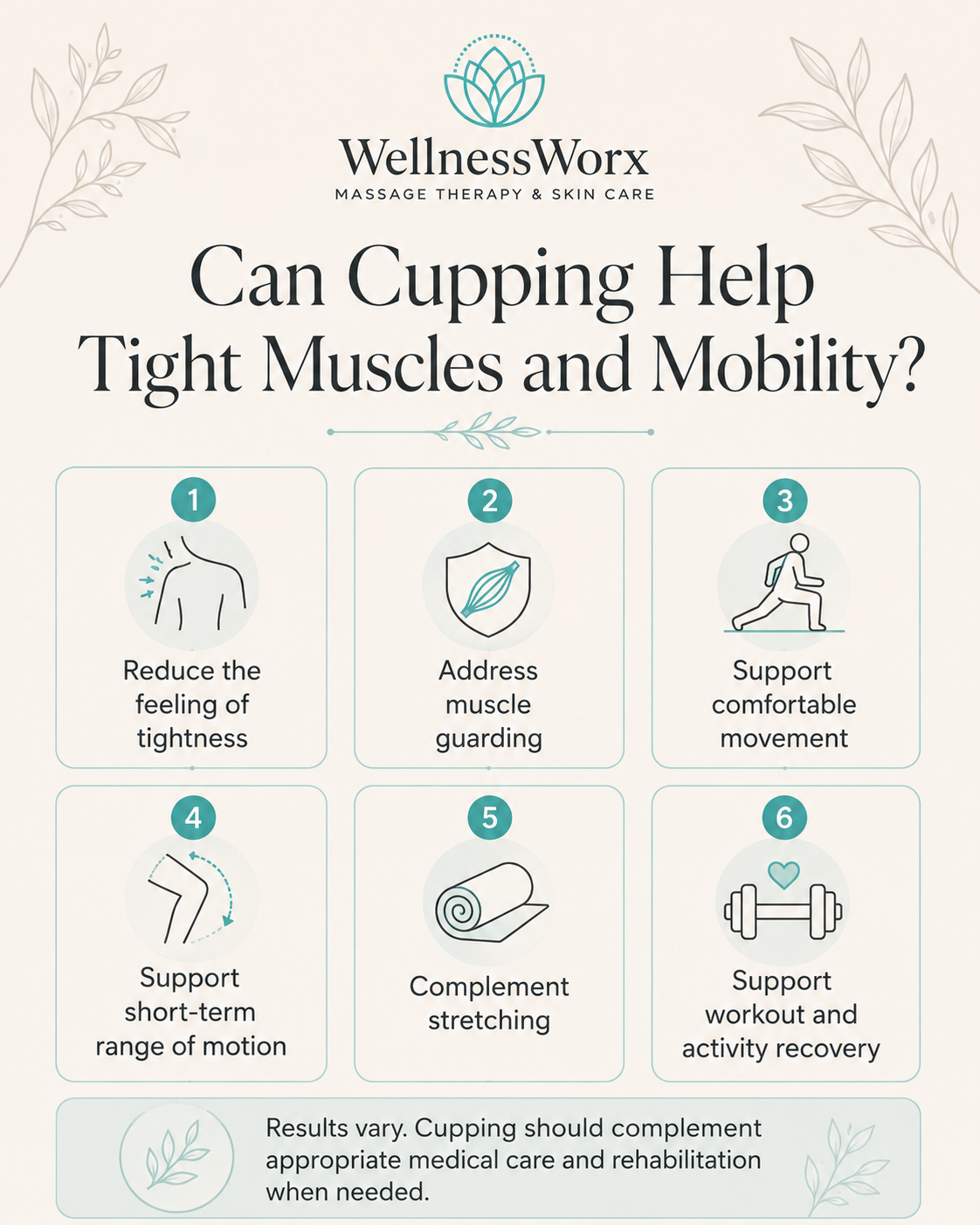
Limited mobility can have many causes, including joint problems, nerve conditions, previous injuries, pain, inflammation, or muscle guarding.
Cupping cannot correct every cause of restricted movement.
When soft-tissue tightness contributes to the problem, however, cupping may be used with the goal of making movement feel more comfortable.
1. It May Reduce the Feeling of Tissue Restriction
Cupping creates suction rather than compression.
This lifting force may provide a different sensory input to tight or tender tissues and may temporarily change how an area feels during movement.
Some clients describe the treated area afterward as:
Looser
Less stiff
Easier to move
Less guarded
More comfortable during stretching
Individual responses vary.
2. It May Support Short-Term Range of Motion
Research into cupping and mobility has produced mixed results.
A systematic review found low-quality evidence suggesting dry cupping may improve range of motion compared with no treatment, while a later review found moderate evidence for increased soft-tissue flexibility in some musculoskeletal rehabilitation settings.
However, not every study has found a meaningful benefit. For example, research involving healthy adults with limited hamstring flexibility found cupping did not improve range of motion more than sham treatment or control conditions.
That is why cupping should not be presented as a guaranteed way to become more flexible.
3. It May Complement Stretching or Mobility Work
Some therapists use cupping before or alongside:
Assisted stretching
Mobility exercises
Massage
Recovery-focused bodywork
If an area feels less guarded after treatment, a client may find certain movements more comfortable.
Cupping does not replace strengthening, physical therapy, or medically necessary rehabilitation when those are needed.
Which Areas Can Be Treated With Cupping?
Cupping may be used on areas such as the:
Upper back
Shoulders
Lower back
Glutes
Hips
Thighs
Hamstrings
Calves
Arms
The exact placement depends on the client's symptoms, goals, health history, and the therapist's assessment.
Cups should not simply be placed wherever something hurts. The therapist should first determine whether cupping is appropriate for the area.
What Does Cupping Feel Like?
Cupping usually creates a pulling, stretching, or tight sensation against the skin.
It should not feel unbearably painful.
Depending on the suction level and location, you may notice:
Firm pulling
Tightness
Pressure
Warmth
A stretching sensation
Increased awareness of the treated area
Your therapist can decrease suction, remove a cup, or change its placement if the sensation becomes uncomfortable.
Cleveland Clinic notes that cupping should not cause significant pain, although some clients experience temporary tightness during treatment and mild soreness afterward.
What Are the Round Marks After Cupping?
Cupping can leave temporary circular discoloration where the cups were placed.
The marks may appear:
Pink
Red
Purple
Darker in some areas than others
The color does not reliably indicate how many “toxins” were removed from the body.
The marks result from the suction's effect on tiny blood vessels and tissues near the surface of the skin. They generally fade over time. Cleveland Clinic notes that visible marks commonly fade within about one to two weeks, while WellnessWorx notes that many marks fade within several days to a week.
How quickly they disappear depends on the person, suction strength, location, and length of treatment.
Do Darker Cupping Marks Mean Something Is Wrong?
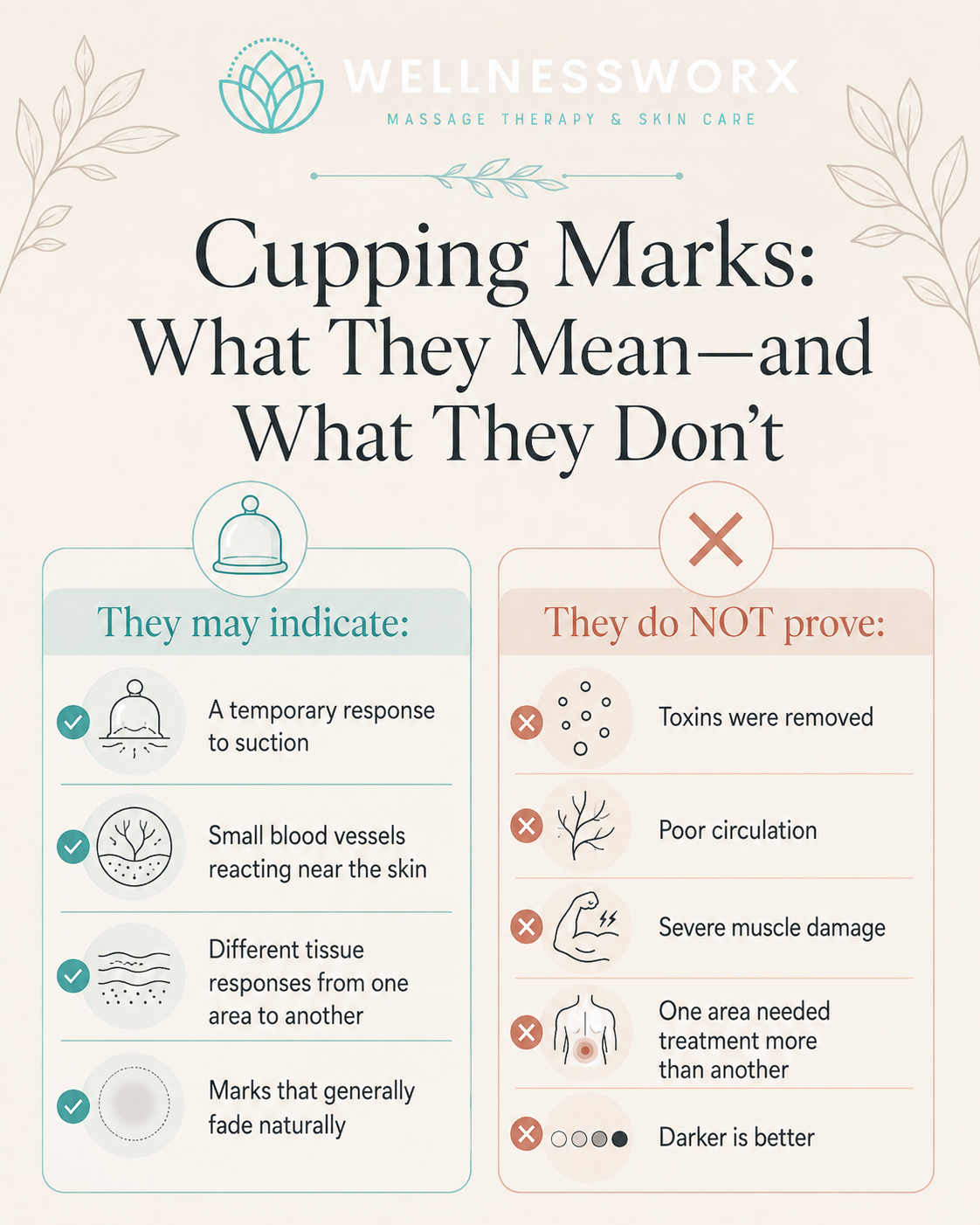
Not necessarily.
Different areas may respond differently to suction, so one cup may leave a darker mark than another.
A dark circle should not automatically be interpreted as proof of:
Toxins
Poor circulation
Severe muscle damage
A specific medical condition
The treatment “working better”
The marks are primarily a response to suction.
Contact a healthcare provider if you develop severe pain, blistering, signs of infection, or skin changes that are not resolving normally.
How Long Are Cups Left in Place?
Treatment varies depending on the therapist, cup style, area being treated, and client's comfort.
Static cups are commonly left in place for several minutes. Moving cupping involves shorter periods of suction while the cup is gently moved over lubricated skin.
Longer or stronger suction does not automatically produce better results.
Your therapist should adjust treatment according to your comfort and tissue response.
Does Cupping Hurt More Than Deep Tissue Massage?
Not necessarily—they feel very different.
Deep-tissue massage typically uses firm compression into muscles and connective tissues.
Cupping creates outward suction.
Someone who finds sustained deep pressure uncomfortable may prefer the sensation of cupping. Another person may dislike suction and prefer traditional massage.
A personalized treatment plan may include:
Massage only
Cupping only
Cupping followed by massage
Massage followed by cupping
Cupping combined with stretching or mobility work
The best approach depends on the individual rather than the belief that one method is universally superior.
Can Cupping Help Neck and Shoulder Tightness?
Cupping is commonly used around the upper back and shoulder region when muscle tension contributes to discomfort.
Research into chronic neck pain is still evolving. A recent systematic review found improvements in pain and function among people with chronic neck pain receiving cupping, although the authors noted methodological limitations in some studies.
Cupping may therefore be considered as one supportive option for some people with muscular neck and shoulder tension.
However, neck pain accompanied by arm weakness, increasing numbness, significant trauma, severe headaches, dizziness, or other neurological symptoms should be medically evaluated.
Can Cupping Help Lower-Back Tightness?
Some research has examined cupping for nonspecific lower-back pain.
A review cited by NCCIH found that participants receiving cupping sometimes experienced better outcomes than people receiving usual care or medication. However, the studies used different techniques and some were low quality, so researchers could not be certain that the differences were meaningful.
More recent evidence also suggests that cupping may reduce pain intensity in some people with chronic musculoskeletal pain, although improvements in overall functional disability have not been consistently demonstrated.
Cupping should therefore complement—not replace—appropriate medical care, exercise, or rehabilitation.
Is Cupping Good for Workout Recovery?
Cupping has become popular among athletes and active adults.
It may be used for:
Post-workout muscle tightness
General soreness
Recovery support
Areas feeling restricted after training
Sports-related muscle fatigue
However, research involving athletes remains limited and many studies have a high or unclear risk of bias. A systematic review concluded that there was not enough evidence to clearly recommend for or against cupping for athletes.
Someone should not use cupping to continue training through an undiagnosed injury.
What Happens During a Cupping Therapy Appointment?
Your therapist should begin by discussing:
Where you feel tight or restricted
How long the problem has been present
What movements feel difficult
Previous injuries
Medications
Skin conditions
Blood-clotting concerns
Previous experience with cupping
Your treatment goals
The therapist may then identify appropriate areas for treatment.
A typical session may include:
Assessment and conversation
Discuss the areas of tension and mobility concerns.Preparing the skin
Lotion or oil may be used if moving cups are planned.Cup placement
Cups are placed over selected areas and suction is adjusted.Monitoring comfort
Your therapist checks your response and may reposition or remove cups.Additional bodywork
Massage, stretching, or mobility techniques may be incorporated when appropriate.
You should communicate immediately if suction becomes painful or causes an unusual sensation.
Who Should Be Careful With Cupping?
Cupping is not appropriate for everyone.
Talk with your healthcare provider and massage therapist before treatment if you have:
A bleeding disorder
A history of blood clots
Significant cardiovascular disease
Anemia
Fragile or easily damaged skin
Active eczema or psoriasis in the treatment area
Open wounds
Skin infection
Recent surgery
A complex medical condition
Pregnancy
Medications that affect bleeding or bruising
Cupping should not be performed directly over wounds, active skin infections, or areas that cannot safely tolerate suction. NCCIH notes that possible complications include burns, infection, persistent discoloration, and scarring, although severe complications are uncommon.
WellnessWorx also advises clients with skin conditions, open wounds, clotting concerns, uncontrolled health conditions, or blood-thinning medications to determine whether cupping is appropriate before treatment.
What Should You Do After Cupping?
After treatment:
Give the marks time to fade naturally
Avoid scratching or aggressively rubbing treated skin
Follow your therapist's individualized recommendations
Pay attention to how the area responds
Avoid treatments that irritate already-sensitive skin
Contact a healthcare provider if concerning symptoms develop
Some temporary tenderness may occur.
You do not need to drink excessive amounts of water to “flush toxins” after cupping. Normal hydration appropriate for your health needs is sufficient.
When Should You Call a Healthcare Provider?
Seek medical advice after cupping if you develop:
Severe or increasing pain
Burns or blistering
Fever
Significant redness or warmth
Yellow drainage
Signs of skin infection
Unusual swelling
Neurological symptoms
A reaction that continues to worsen
Cleveland Clinic recommends contacting a provider for burns, extreme pain or soreness, fever, or signs of skin infection after cupping.
Cupping Therapy for Tight Muscles and Mobility in Glendora, CA
WellnessWorx Massage Therapy & Skin Care provides personalized cupping therapy in Glendora for clients seeking help with muscle tension, stiffness, restricted movement, postural strain, workout soreness, and recovery.
Sessions are customized based on your symptoms, comfort, and goals. Cupping may be performed on its own or incorporated with massage and therapeutic bodywork when appropriate.
WellnessWorx is located at 1200 E Route 66, Suite 115, Glendora, CA 91740.
To learn more or request an appointment, call (909) 631-6012.
This article is provided for general educational purposes and is not intended to diagnose an injury or medical condition. New, severe, unexplained, or worsening pain and mobility problems should be evaluated by an appropriate healthcare professional.
Frequently Asked Questions
-
Cupping may help some people feel less tight or restricted by using suction to gently lift the skin and superficial soft tissues. Research suggests possible short-term benefits for certain musculoskeletal pain and range-of-motion concerns, but results vary and the evidence is still developing.
-
Cupping may temporarily support range of motion or soft-tissue flexibility for some people, but research results are mixed. It should not be considered a guaranteed way to improve flexibility and may work best as part of a broader mobility, stretching, or rehabilitation plan.
-
The circular marks result from suction affecting tissues and small blood vessels near the surface of the skin. They are not reliable indicators of toxins or the severity of muscle tension. The marks generally fade naturally over several days to two weeks.
-
Cupping may create a pulling, tight, or stretching sensation, but it should not cause severe pain. Tell your therapist if the suction feels too intense so it can be adjusted or the cup can be removed.
-
Yes. Cupping is often combined with massage therapy. The therapist may use massage, cupping, stretching, or other techniques depending on your symptoms, comfort, and treatment goals.
