
Massage for Neck Pain After a Car Accident: When Can It Help?
Neck pain after a car accident can make it difficult to turn your head, sleep comfortably, work, drive, or complete ordinary daily activities. Some people notice discomfort immediately, while others develop pain, stiffness, headaches, or shoulder tension several hours or days later.
Massage therapy may help address certain muscle and soft-tissue symptoms after a collision, but it should not be the first step when a new injury has not been medically evaluated. Car accidents can cause injuries ranging from mild muscular strain to fractures, nerve involvement, concussion, or spinal injury.
Once serious injury has been ruled out and a healthcare provider has determined that massage is appropriate, personalized medical massage may help reduce muscle tension, support comfortable movement, and complement a broader recovery plan.
Why Does Neck Pain Happen After a Car Accident?
During a collision, the head and neck may move suddenly forward, backward, or sideways. This rapid movement can strain muscles, ligaments, joints, and other soft tissues around the neck and upper back.
This type of injury is commonly called whiplash, although not every case of post-accident neck pain is whiplash.
Symptoms may include:
Neck pain or stiffness
Reduced range of motion
Pain that increases with movement
Headaches that begin near the base of the skull
Upper-back or shoulder pain
Muscle tenderness or tightness
Arm pain
Dizziness
Fatigue
Tingling or numbness
Whiplash symptoms do not always appear immediately. Some people notice discomfort within hours, while others develop symptoms over the following days.
Because the symptoms of a muscular strain can overlap with more serious injuries, it is important not to diagnose yourself based only on how the pain feels.
Should You See a Doctor Before Getting a Massage?
Yes. New neck pain following a motor vehicle accident should be evaluated by an appropriate healthcare professional before massage begins.
Even when the collision seems minor, medical evaluation can help identify or rule out concerns such as:
Fractures
Disc injuries
Nerve involvement
Concussion or traumatic brain injury
Spinal cord injury
Joint instability
Significant ligament damage
Other injuries that may require treatment modifications
Mayo Clinic advises people to seek medical evaluation when neck pain or other symptoms develop after an injury because whiplash symptoms may not appear immediately.
Massage therapists can assess muscle tension and movement within their professional scope, but they do not diagnose fractures, concussions, disc injuries, or neurological conditions.
When Is Neck Pain After an Accident an Emergency?
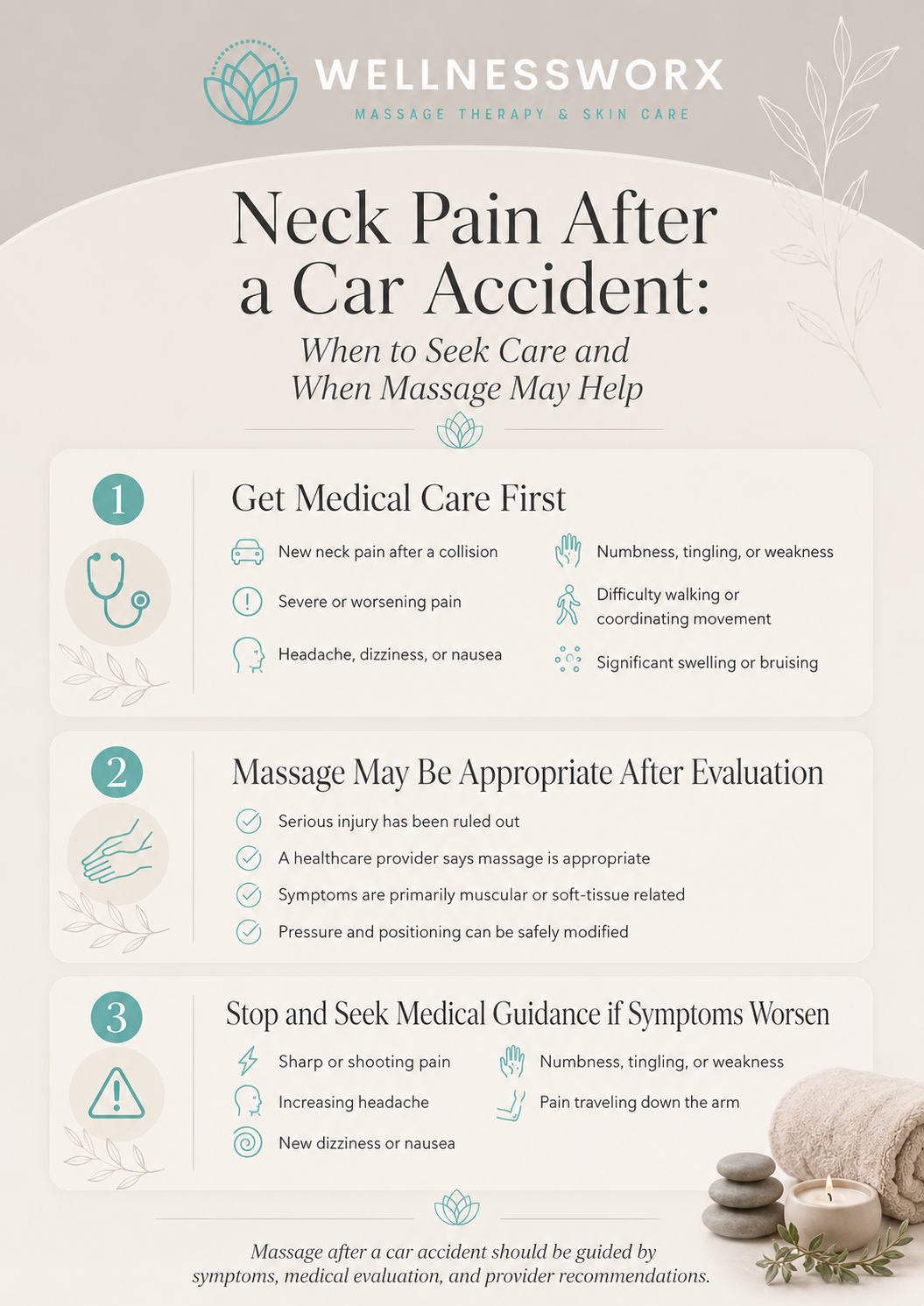
Seek emergency medical care for severe neck pain after an accident, particularly when it is accompanied by symptoms such as:
Weakness or loss of coordination
Numbness or tingling in the arms or legs
Difficulty walking or maintaining balance
Loss of bladder or bowel control
Difficulty breathing
A severe or worsening headache
Repeated vomiting
Loss of consciousness
Confusion or unusual drowsiness
An inability to move an arm or hand
These symptoms may indicate a condition that requires immediate medical attention rather than massage therapy.
When you are uncertain about the seriousness of your symptoms, it is safer to obtain medical guidance before scheduling bodywork.
When Can Massage Help After a Car Accident?
Massage may be appropriate after a healthcare professional has evaluated the injury, ruled out serious complications, and determined that soft-tissue treatment is safe.
Depending on the nature of the injury, massage may be used to support concerns such as:
Muscle tension around the neck and shoulders
Upper-back tightness
Protective muscle guarding
Reduced comfort while turning the head
Tender or overworked muscles
Headaches associated with muscle tension
Stiffness caused by reduced activity
Ongoing soft-tissue discomfort during recovery
Research suggests that massage therapy may provide short-term benefits for some people with neck or shoulder pain. However, the evidence is not strong enough to guarantee results, and the benefits may be temporary. Massage should therefore be considered one possible part of care rather than a cure for whiplash or every type of post-accident neck pain.
How May Massage Support Recovery?
A car accident can cause the muscles around the neck, shoulders, and upper back to tighten in response to pain or instability. This protective reaction is sometimes called muscle guarding.
Guarding may make movement feel restricted and can cause surrounding muscles to work harder than usual. A carefully planned massage session may help reduce some of this soft-tissue tension and make gentle movement feel more comfortable.
Treatment may focus on muscles around the:
Neck
Base of the skull
Shoulders
Upper back
Shoulder blades
Chest
Arms
Massage may also help clients become more aware of where they are holding tension. This can support communication with a physician, physical therapist, or other member of the recovery team.
Massage does not realign the spine, repair fractures, reverse nerve damage, or replace medically necessary rehabilitation.
Is Massage Appropriate Immediately After the Accident?
There is no universal timeline that applies to every car accident injury.
Some people may be cleared for gentle massage relatively early, while others need additional imaging, medical treatment, rest, or rehabilitation before hands-on therapy is appropriate. The timing depends on factors such as:
The severity of the collision
The type of injury
Current symptoms
Imaging or examination results
Medications
Swelling or bruising
Neurological symptoms
Recommendations from the treating provider
Do not assume that massage is safe simply because several days have passed. Medical clearance is particularly important when pain is severe, symptoms are worsening, or numbness, weakness, dizziness, or headaches are present.
What Happens During a Post-Accident Massage Appointment?
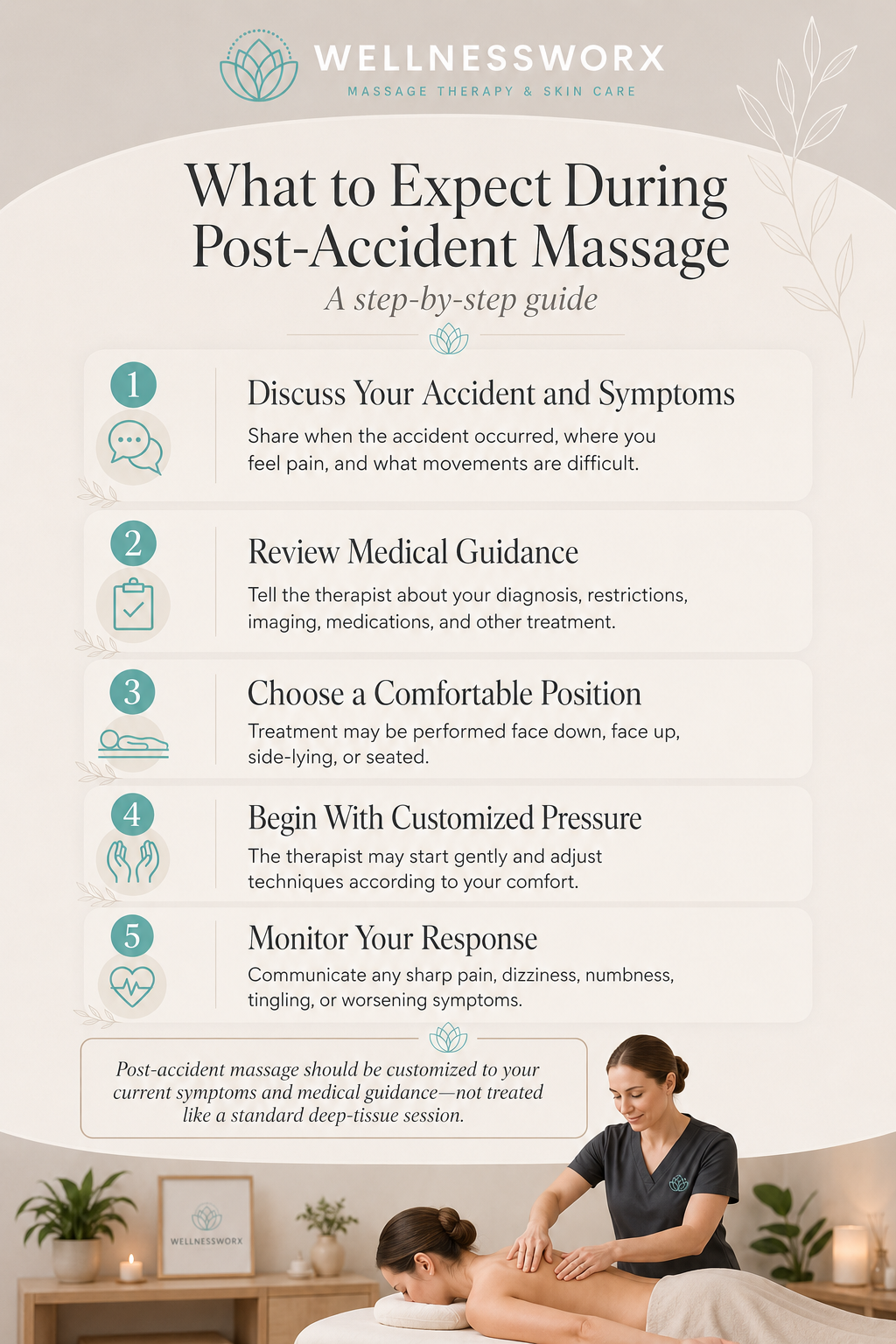
A medical massage appointment should begin with a detailed conversation about the accident, your evaluation, current symptoms, and treatment goals.
Your massage therapist may ask:
When the accident occurred
Where you feel pain or tension
Whether symptoms appeared immediately or later
Which movements increase the discomfort
Whether you have headaches, dizziness, numbness, or tingling
Whether imaging was performed
What your healthcare provider diagnosed or recommended
Which medications you are taking
Whether you are also receiving physical therapy or other care
What positions are comfortable for you
The therapist may also ask you to describe how the injury affects activities such as driving, sleeping, working, lifting, or turning your head.
The session should be adapted to your current tolerance. Treatment may begin with lighter pressure and shorter periods of focused work rather than aggressive deep-tissue techniques.
What Massage Techniques May Be Used?
The techniques selected should depend on your symptoms, medical history, provider recommendations, and comfort.
A session may include:
Gentle therapeutic massage
Myofascial techniques
Trigger-point work
Light stretching
Focused work around the shoulders and upper back
Careful treatment of muscles at the base of the skull
Mobility-focused bodywork
Relaxation techniques to reduce generalized tension
Medical massage describes the treatment’s goal, not one required technique.
A therapist may use deeper pressure later in recovery when appropriate, but post-accident massage does not automatically mean deep-tissue massage. Applying intense pressure to a recently injured or highly sensitive area may aggravate symptoms.
Does Massage for Whiplash Need to Hurt?
No. Massage does not need to cause intense pain to be useful.
Some injured or tense areas may feel tender, but the pressure should remain within a tolerable range. Excessive discomfort may cause additional guarding and make it harder for the body to relax.
Tell your therapist immediately if treatment causes:
Sharp or shooting pain
Increasing headache
Dizziness
Nausea
Numbness or tingling
Weakness
Visual changes
Pain that travels down an arm
A sudden increase in symptoms
The therapist may need to change the pressure, reposition you, avoid the area, or stop the session and recommend further medical evaluation.
Can Massage Help Whiplash Headaches?
Whiplash-related headaches may be connected to muscle tension around the neck, shoulders, and base of the skull. In those cases, carefully selected massage techniques may help reduce some of the surrounding muscular tension.
However, a headache after a car accident can also be associated with concussion or another injury. A new, persistent, severe, or worsening headache should be medically evaluated before it is treated as ordinary muscular tension.
Massage research for headaches remains limited, so it should not be presented as a guaranteed treatment.
Can Massage Restore Neck Movement?
Massage may help someone move more comfortably when muscle tension and guarding are contributing to stiffness.
However, reduced movement after an accident can have several possible causes, including:
Pain
Swelling
Joint irritation
Muscle guarding
Ligament injury
Disc injury
Nerve involvement
Fear of aggravating the injury
A massage therapist should not force the neck through a restricted range of motion. Any stretching or mobility work should be gentle, controlled, and consistent with medical recommendations.
Exercise and active rehabilitation may also be important parts of whiplash recovery. Massage is often most appropriate as a complementary service rather than the only form of treatment. Research involving whiplash care has generally supported active, individualized rehabilitation instead of prolonged inactivity alone.
How Many Massage Sessions Will You Need?
The number of appointments varies based on:
The type and severity of the injury
How long symptoms have been present
Medical recommendations
Your response to treatment
Whether you are receiving other forms of care
Your functional goals
How symptoms change between appointments
Some clients notice temporary improvements in tension or comfort after one session. Others may benefit from a series of appointments coordinated with a broader recovery plan.
A responsible therapist should regularly reassess how you are responding. Treatment should be modified when symptoms worsen, progress stops, or new concerns appear.
No massage therapist should promise that a specific number of sessions will cure whiplash or completely eliminate post-accident pain.
What Should You Bring to Your Appointment?
Bring or be prepared to discuss:
The date of the collision
Your healthcare provider’s findings
Medical restrictions or clearance
Current medications
Imaging results when relevant
Areas of pain, numbness, or limited movement
Other treatment you are receiving
Positions that are uncomfortable
Your goals for massage therapy
Tell the therapist about blood-thinning medication, fractures, recent surgery, injections, severe osteoporosis, circulation problems, skin injuries, or other health concerns that may affect treatment.
The more complete the information, the easier it is to customize the session safely.
When Should Massage Be Delayed or Avoided?
Massage should generally be delayed until appropriate medical evaluation has occurred when there is:
A suspected fracture or unstable injury
Severe or rapidly worsening pain
Significant swelling or bruising
New numbness, tingling, or weakness
Dizziness or balance problems
A severe or worsening headache
An open wound or skin infection
A suspected blood clot
Fever or acute illness
A healthcare restriction against massage
Massage may still be possible with some medical conditions, but the session may require clearance or substantial modifications.
Medical Massage for Car-Accident Neck Pain in Glendora, CA
WellnessWorx Massage Therapy & Skin Care provides personalized medical massage in Glendora for clients experiencing muscle tension, stiffness, limited mobility, and injury-related discomfort.
Every session begins with a discussion of your symptoms, medical history, comfort level, and goals. Treatment is customized rather than following a standard full-body routine.
When massage is appropriate after a car accident, our therapists may focus on the neck, shoulders, upper back, and other soft tissues contributing to tension and restricted movement. Massage can also be coordinated with recommendations from your physician, physical therapist, chiropractor, or other healthcare professional.
To ask about medical massage for neck pain after a car accident, contact WellnessWorx at (909) 631-6012. WellnessWorx provides massage therapy and recovery-focused services from its Glendora location.
This article is provided for general educational purposes and is not intended to diagnose an injury or replace medical care. Neck pain following a motor vehicle accident should be evaluated by an appropriate healthcare professional before massage therapy begins.
Frequently Asked Questions
-
There is no single waiting period that applies to every injury. You should first be evaluated by an appropriate healthcare professional and receive confirmation that massage is safe. Timing will depend on your symptoms, diagnosis, imaging results, medications, and the severity of the accident.
-
No. Massage cannot be guaranteed to cure whiplash. It may help reduce certain muscle-tension and soft-tissue symptoms after serious injury has been ruled out, but it should be used as part of an appropriate recovery plan rather than as a replacement for medical evaluation or rehabilitation.
-
Deep pressure is not always appropriate after an accident. Recently injured or sensitive tissues may respond better to lighter, more gradual techniques. Your therapist should select the pressure based on your medical history, symptoms, treatment stage, and comfort—not assume that deeper pressure is better.
-
Massage can aggravate symptoms when it is performed too soon, uses excessive pressure, or treats an injury that has not been properly evaluated. Tell the therapist immediately if you experience sharp pain, dizziness, worsening headache, numbness, tingling, weakness, or increased symptoms.
-
A referral may not always be required to schedule massage, but medical evaluation and clearance are strongly recommended following a car accident. A referral or written treatment order may also be required by an insurer, attorney-managed case, healthcare plan, or other payer.
