
Benefits of Lymphatic Drainage Massage: What to Expect
Lymphatic drainage massage is a gentle form of bodywork designed to encourage the natural movement of lymph fluid through the body. Unlike deep tissue massage, it uses light, rhythmic movements rather than firm pressure or intensive muscle work. People may seek lymphatic massage for swelling, fluid buildup, post-surgical recovery, feelings of heaviness, or general relaxation. It can also be used as part of a broader treatment plan for lymphedema—a condition in which lymph fluid accumulates in the body’s tissues.
Although lymphatic drainage massage may be beneficial in certain situations, it is not appropriate for everyone. Anyone experiencing unexplained swelling, recovering from surgery, or managing a medical condition should obtain guidance from an appropriate healthcare professional before beginning treatment.
What Is the Lymphatic System?
The lymphatic system is part of the body’s immune and circulatory systems. It consists of lymph vessels, lymph nodes, organs, and tissues that help move fluid through the body and support immune function. Lymph is a clear fluid that carries immune cells and collects excess fluid, proteins, and other materials from the tissues. It travels through lymph vessels and lymph nodes before returning to the bloodstream.
Unlike the cardiovascular system, the lymphatic system does not have a central pump like the heart. Lymph movement is supported by breathing, muscle activity, body movement, and pressure changes within the tissues. When lymph vessels or nodes are damaged, removed, blocked, or unable to manage the fluid load, swelling known as lymphedema may develop. It most commonly affects an arm or leg but can also occur in other parts of the body.
What Is Lymphatic Drainage Massage?
Lymphatic drainage massage—also called manual lymphatic drainage or MLD—is a light-touch technique that uses slow, repetitive movements to gently stretch the skin in directions that follow the lymphatic pathways. The purpose is not to press deeply into the muscles. Instead, the therapist uses soft, intentional movements designed to encourage fluid to move toward areas where the lymphatic system can process it more effectively.
Manual lymph drainage is commonly used as one component of lymphedema care alongside compression, exercise, movement, skin care, and other provider-directed treatments. At WellnessWorx, lymphatic massage is customized according to the client’s health history, comfort level, areas of concern, and treatment goals. The technique uses gentle pressure rather than the firm pressure associated with deep tissue massage.
What Are the Potential Benefits of Lymphatic Drainage Massage?
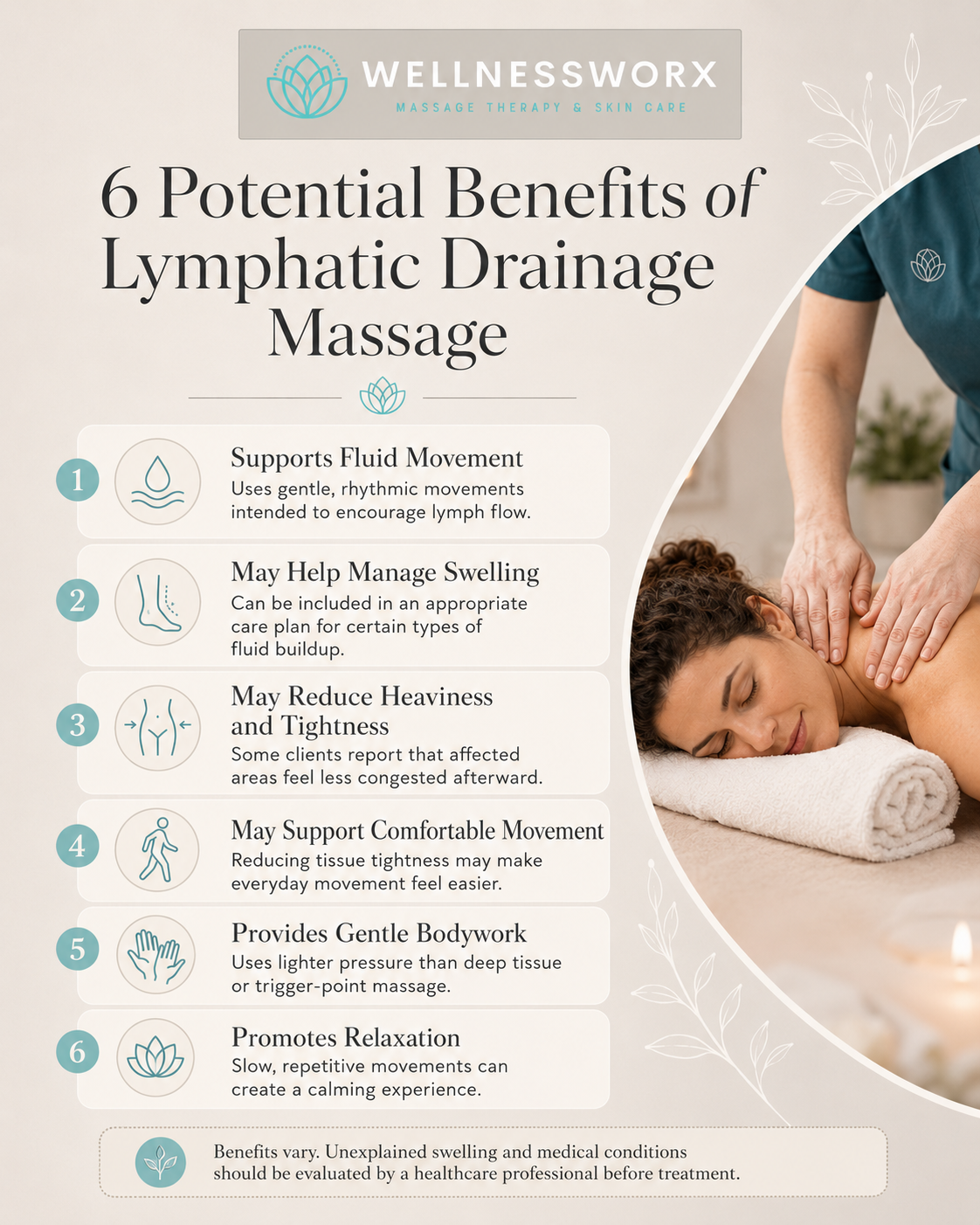
The benefits will depend on why the massage is being performed, the client’s health, and whether the lymphatic system has been affected by surgery, illness, injury, or another condition.
1. May Help Manage Lymphedema
Lymphedema occurs when lymph fluid builds up in the tissues because the lymphatic system is damaged or blocked.
It can cause:
Swelling
Heaviness or tightness
Reduced range of motion
Aching or discomfort
Skin changes
Difficulty wearing clothing or jewelry
Increased risk of skin infection
Manual lymphatic drainage may be incorporated into a complete decongestive therapy plan for lymphedema. It is usually not the only treatment. Compression garments, exercise, skin care, and education may also be necessary. Research examining manual lymphatic drainage for breast-cancer-related lymphedema has produced mixed results. Some studies report improvements in swelling, pain, symptoms, or quality of life, while others find little additional benefit beyond other components of treatment. It is most accurate to consider MLD one possible part of individualized lymphedema management rather than a guaranteed solution.
2. May Support Post-Surgical Swelling Management
Surgery can temporarily affect fluid movement and cause swelling, tenderness, and a feeling of tightness. When approved by the surgeon, gentle lymphatic drainage may be incorporated into recovery following certain procedures. The timing and technique should be based on the procedure, healing progress, incision condition, risk factors, and the surgeon’s instructions. A review of lymphatic massage following cosmetic procedures found that it is commonly used to address fluid buildup, but also noted that the exact physiological mechanisms and supporting evidence remain incomplete. Post-surgical massage should therefore be approached as provider-guided supportive care—not as something every surgical patient automatically needs. Never begin massage directly over fresh incisions, wounds, active infection, significant bruising, or tissue that has not been medically cleared.
3. May Reduce Feelings of Heaviness and Tightness
Fluid buildup can make an affected area feel heavy, full, tight, or uncomfortable. Because lymphatic drainage massage uses gentle movements intended to encourage fluid movement, some clients report that the treated area feels lighter or less congested afterward. The response can vary considerably. Temporary relief does not necessarily mean that an underlying condition has been resolved. Persistent or unexplained swelling should be evaluated by a healthcare provider.
4. May Support Comfortable Movement
Swelling and tissue tightness can interfere with bending, reaching, walking, exercising, or completing everyday activities. When fluid buildup contributes to restricted movement, reducing some of that congestion may make movement feel more comfortable. Massage may also be paired with gentle range-of-motion exercises or other rehabilitation recommended by the client’s healthcare team. Manual lymph drainage should not be used to force movement through pain or replace medically necessary physical therapy.
5. Provides a Gentle Option for Sensitive Clients
Some clients want the benefits of hands-on bodywork but do not tolerate deep pressure comfortably. Lymphatic drainage massage uses much lighter touch than deep tissue or trigger-point work. That can make it an appealing option for clients who feel sensitive, tender, or overwhelmed by firm-pressure massage. However, gentle does not automatically mean medically appropriate. Certain health conditions can make even light lymphatic work unsafe without clearance.
6. May Promote Relaxation
The slow, repetitive rhythm of lymphatic massage can feel calming. Many clients find the light pressure relaxing and may experience a general sense of ease during or after the appointment. Relaxation is a valid benefit even when the massage is not being used to treat a diagnosed lymphatic disorder.
Does Lymphatic Massage “Detox” the Body?
The word detox is frequently used when describing lymphatic drainage massage, but it can be misleading. The lymphatic system naturally helps collect excess fluid, cellular material, bacteria, and other substances from the tissues. The liver, kidneys, lungs, digestive system, immune system, and lymphatic system all play roles in processing and removing waste.
Lymphatic massage is better described as a technique intended to support fluid movement. It should not be marketed as a method that removes undefined toxins, cures illness, causes substantial fat loss, or replaces normal organ function. There is also no good reason to expect dramatic weight loss from lymphatic massage. A temporary change on the scale could reflect fluid movement rather than fat loss.
Is Lymphatic Drainage Massage the Same as Deep Tissue Massage?
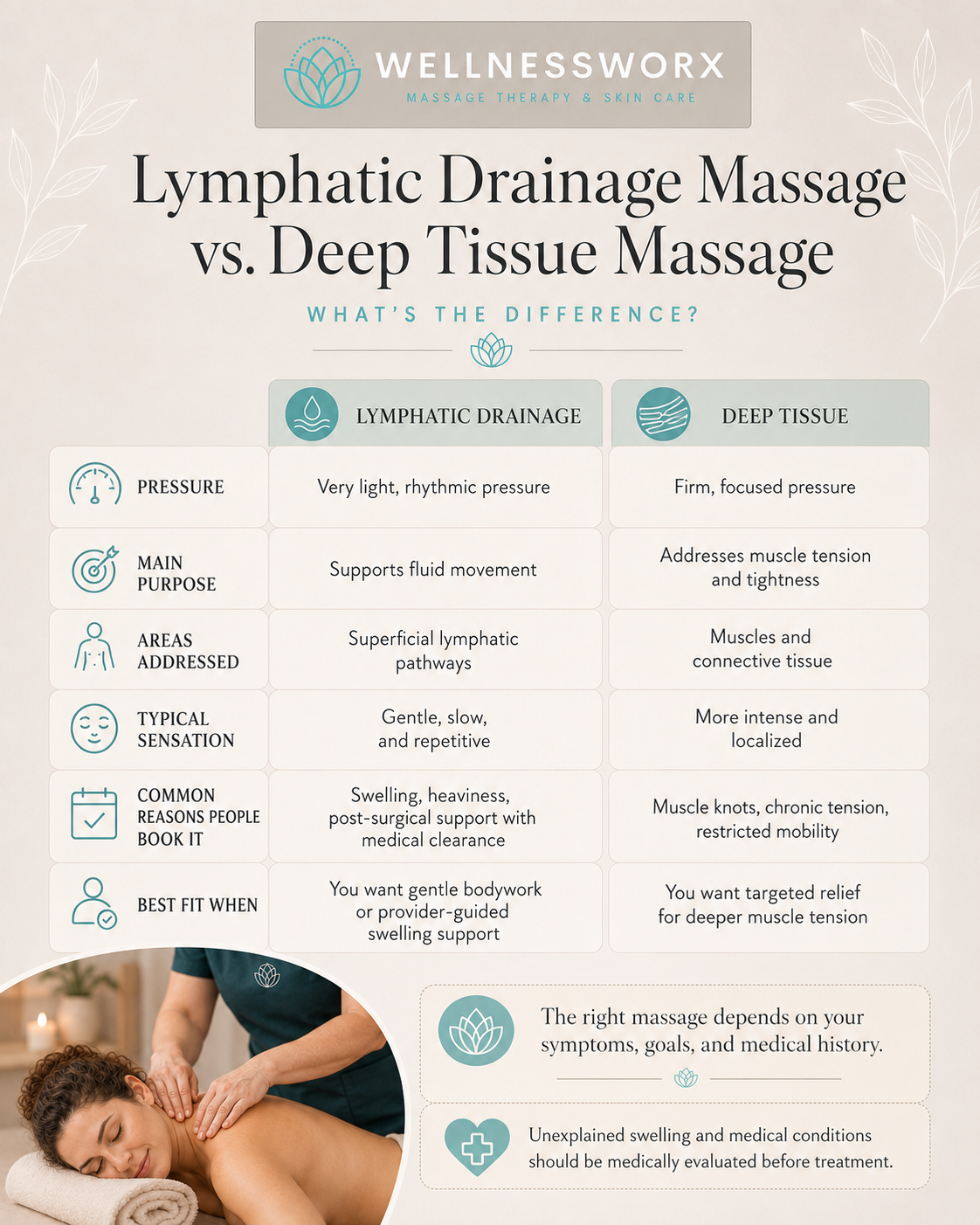
No. The techniques and goals are different. A lymphatic massage should not feel like someone is pushing forcefully into the muscles. The lymphatic vessels involved in manual drainage are close to the skin, so excessive pressure may not support the intended technique.
Who May Consider Lymphatic Drainage Massage?
Lymphatic massage may be considered by people who:
Have provider-diagnosed lymphedema
Experience swelling related to lymphatic impairment
Have been medically cleared for post-surgical massage
Feel heaviness or tightness associated with fluid buildup
Need a gentler alternative to firm-pressure massage
Have been referred by a physician, surgeon, physical therapist, or lymphedema specialist
Want a calming, light-touch massage experience
Having swelling does not automatically mean lymphatic drainage massage is appropriate. Swelling can have many possible causes, including injury, infection, blood clots, heart conditions, kidney conditions, medication reactions, and circulation problems. New or unexplained swelling should be medically evaluated before massage.
What Happens During a Lymphatic Drainage Massage Appointment?
The appointment should begin with a discussion of your health history and reasons for seeking treatment.
Your therapist may ask about:
Where you notice swelling, tightness, or heaviness
When the symptoms began
Previous surgeries or cancer treatment
Lymph-node removal or radiation treatment
Medications
Heart, kidney, vascular, or immune conditions
Recent infection or fever
Blood-clot history
Your surgeon’s or physician’s recommendations
Compression garments or other treatment you currently use
During the session, you may lie face up, face down, or on your side depending on the area being treated and your comfort. The therapist may begin near areas where lymph fluid normally drains before working farther away. Movements are generally slow, light, and repetitive. You may notice gentle skin stretching, but the treatment should not involve aggressive kneading.
What Does Lymphatic Drainage Massage Feel Like?
Lymphatic drainage massage typically feels:
Light
Slow
Rhythmic
Repetitive
Calm
Gentle rather than forceful
It should not feel like deep tissue massage. You may feel subtle pressure or movement across the skin, but it should not cause sharp pain.
Tell your therapist immediately if you experience:
Increased pain
Dizziness
Shortness of breath
Chest discomfort
Nausea
Sudden weakness
New numbness
A significant increase in swelling
Any other unexpected symptom
When Should You Avoid Lymphatic Drainage Massage?
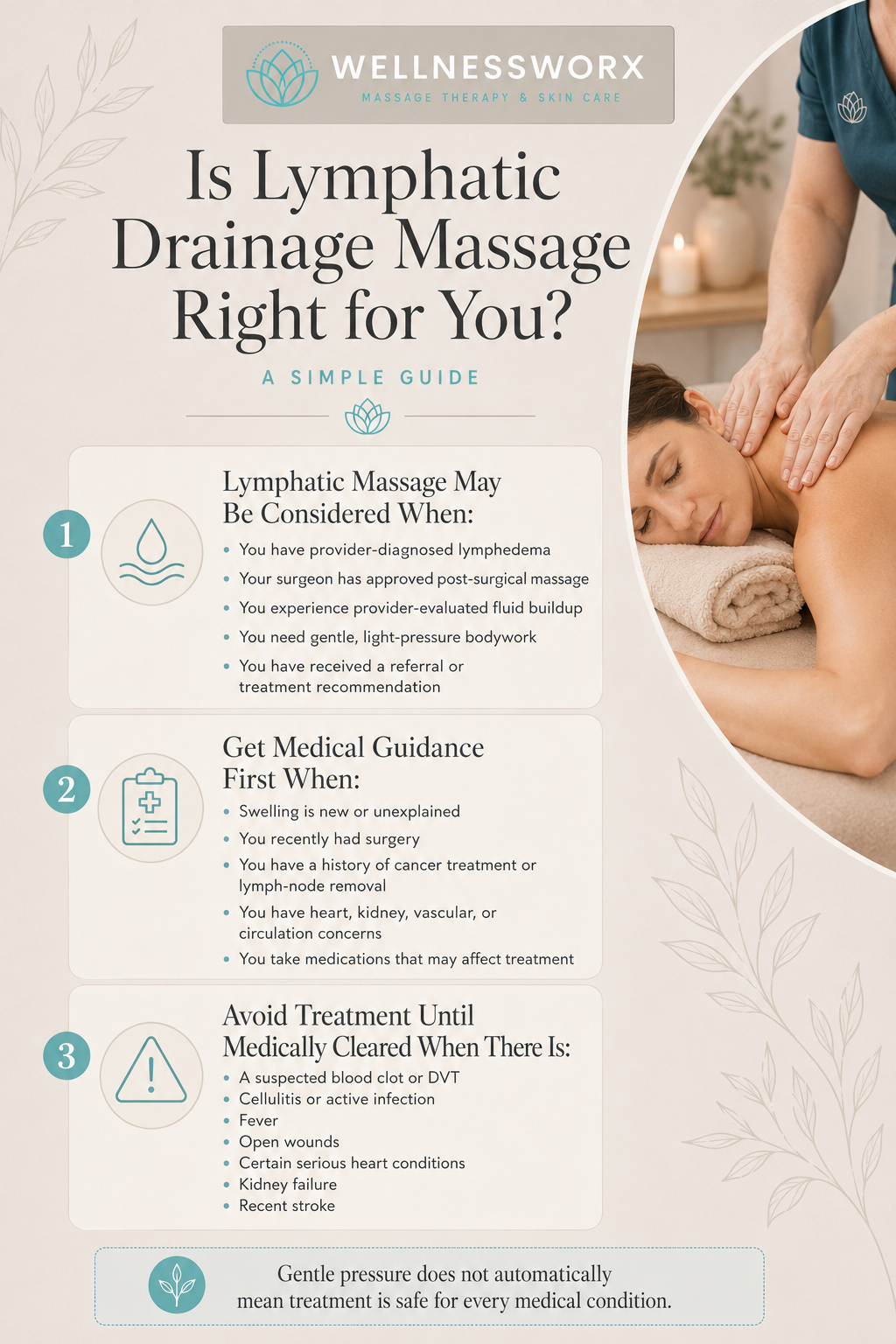
Lymphatic drainage massage may need to be avoided or postponed when you have:
A known or suspected blood clot
Deep vein thrombosis
Cellulitis
Fever
An active infection
Uncontrolled or serious heart disease
Kidney failure
A recent stroke
An unexplained area of swelling
Open wounds or damaged skin
A medical restriction against massage
Cleveland Clinic specifically advises avoiding lymphatic drainage massage with conditions including blood clots, cellulitis, deep vein thrombosis, fever, infection, certain heart conditions, kidney failure, and stroke. People with cancer, previous cancer treatment, lymph-node removal, radiation treatment, or active medical care should discuss lymphatic drainage with their oncology or medical team before scheduling.
Do You Need Medical Clearance After Surgery?
Yes. Obtain clearance directly from your surgeon before receiving post-surgical lymphatic massage.
Ask the surgeon:
When massage can safely begin
Which areas may be treated
Which areas must be avoided
Whether incisions are sufficiently healed
How much pressure is appropriate
Whether compression garments should be worn
Which symptoms require immediate follow-up
Whether the therapist needs written instructions
Do not rely only on a general timeline found online. Two people undergoing the same procedure may heal differently or have different risk factors.
How Often Should You Receive Lymphatic Massage?
There is no universal schedule.
Frequency may depend on:
The reason for treatment
The severity of swelling
Medical recommendations
Whether you are receiving complete decongestive therapy
Surgical instructions
Your response after each appointment
Whether treatment is clinical or relaxation-focused
Someone receiving provider-directed treatment for lymphedema may follow a different schedule than someone booking an occasional gentle wellness massage. Your therapist and healthcare provider can help determine whether continued sessions are appropriate.
What Should You Do After the Appointment?
After the massage:
Pay attention to how you feel
Follow any instructions from your physician or surgeon
Wear prescribed compression garments as directed
Continue approved movement or exercises
Maintain normal hydration based on your healthcare needs
Contact your provider if swelling or symptoms worsen
You do not need to force excessive amounts of water to “flush out toxins.” People with heart, kidney, or fluid-restriction concerns should follow their healthcare provider’s hydration guidance.
Lymphatic Drainage Massage in Glendora, CA
WellnessWorx Massage Therapy & Skin Care provides personalized lymphatic massage in Glendora for clients seeking gentle support for fluid movement, swelling, post-surgical recovery, and whole-body relaxation. Each appointment is adapted to your health history, comfort level, treatment goals, and medical guidance. Unlike deep tissue massage, lymphatic drainage uses light, intentional touch rather than firm pressure. Clients recovering from surgery or managing a diagnosed medical condition should receive appropriate clearance before treatment.
To learn more about lymphatic drainage massage in Glendora, contact WellnessWorx at (909) 631-6012.
This article is provided for general educational purposes and is not intended to diagnose or treat a medical condition. Consult an appropriate healthcare professional regarding unexplained swelling, post-surgical care, lymphedema, or other health concerns.
Frequently Asked Questions
-
Lymphatic drainage massage may help support fluid movement, manage certain types of swelling, reduce feelings of heaviness or tightness, promote comfortable movement, and provide relaxation. Benefits vary, and medical conditions such as lymphedema generally require a broader treatment plan.
-
No. Proper lymphatic drainage massage uses light, rhythmic movements and should not feel like deep tissue massage. The treatment should not cause sharp pain or require forceful pressure.
-
It may be used after certain procedures when the surgeon has approved it. The timing, treatment area, pressure, and frequency should follow the surgeon’s guidance. Massage should not be performed over fresh incisions, wounds, active infection, or areas that have not been medically cleared.
-
Lymphatic massage is intended to support fluid movement. It should not be expected to remove undefined toxins or produce meaningful fat loss. Any temporary change in weight or appearance may be related to fluid rather than body fat.
-
People with a known or suspected blood clot, deep vein thrombosis, cellulitis, fever, active infection, certain heart conditions, kidney failure, recent stroke, or unexplained swelling should avoid treatment until medically evaluated and cleared.
