
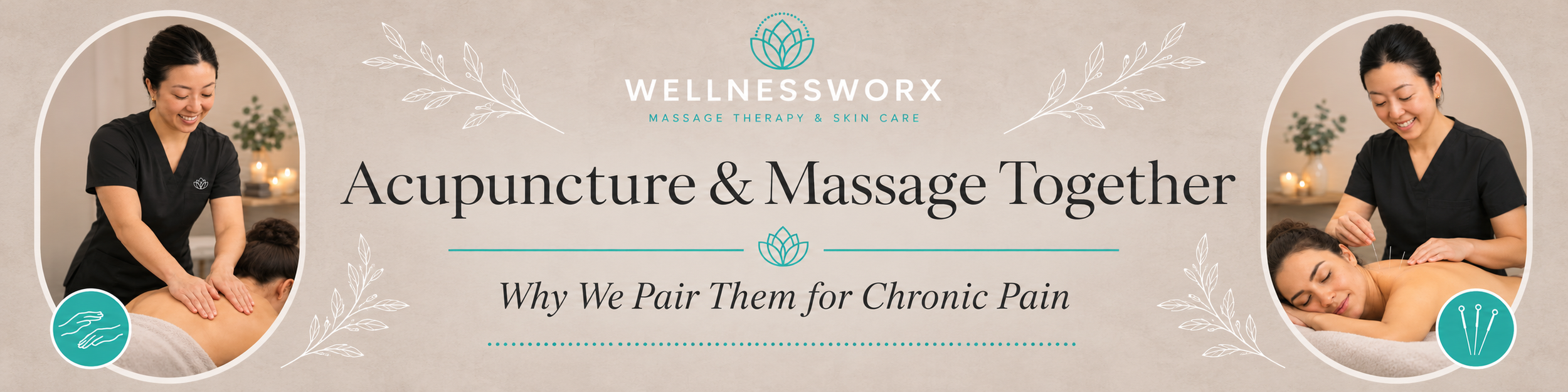
Chronic pain rarely has just one cause, so it often doesn't respond to just one approach. Tight, guarded muscles, an overworked nervous system, poor sleep and stress can all feed the same cycle of pain.
That's why at WellnessWorx we often pair acupuncture with massage therapy for clients living with chronic pain. The two work in different ways, and together they may help address more than one piece of the problem. Here's how each one works, who may benefit from combining them, and how to book both.
How Acupuncture and Massage Work Differently
Massage therapy: hands-on work for muscles and soft tissue
Massage works from the outside in. A licensed massage therapist uses pressure, stretching and targeted techniques on your muscles and connective tissue. For chronic pain, massage may help:
Loosen tight, overworked muscles and trigger points
Ease protective guarding around a sore area
Improve range of motion and how freely you move
Encourage relaxation, which may lower the overall tension in your body
Our chronic pain massage therapy and medical massage sessions are tailored to the specific areas and patterns behind your pain.
Acupuncture: thin needles at specific points
Acupuncture works differently. Our licensed acupuncturist, Sharon Chen, L.Ac., places very thin, sterile, single-use needles at selected points based on your symptoms, health history and goals. Researchers are still studying exactly how it works, but acupuncture is thought to influence how the nervous system processes pain signals. For chronic pain, acupuncture may help:
Reduce how intense or constant pain feels
Calm a stressed, "on alert" nervous system
Support better sleep and relaxation
Reach areas that are too tender for deep hands-on pressure
Sharon has nearly seven years of experience specializing in orthopedics and pain management, and may use traditional Chinese medicine (TCM) acupuncture, electroacupuncture or ear acupuncture depending on your needs. Learn more about each on our acupuncture page.
The short version
Massage focuses mainly on the muscles and soft tissue. Acupuncture focuses mainly on specific points and the nervous system's response to pain. Because they approach pain from different directions, many people find they complement each other well.
Why We Pair Them for Chronic Pain
Chronic pain often involves both a physical component (tight, restricted tissue) and a nervous system component (pain signals that stay turned up long after an injury). Combining the two may help with both at once:
Massage works directly on tight muscles and restricted movement.
Acupuncture may help calm pain signaling and support relaxation, which can make it easier for muscles to let go.
Together, they may help you feel relief from more than one angle, and some people find the benefits of each session last longer.
Because both services are offered under one roof, your massage therapist and Sharon can work from the same picture of your goals instead of you coordinating care between two different offices.
Who May Benefit From Combining Acupuncture and Massage
Pairing the two may be a good fit if you're dealing with:
Chronic back pain, especially when stiffness and muscle spasm are part of the picture
Neck and shoulder pain from desk work, stress or an old injury
Tension headaches or migraines linked to neck and shoulder tightness
Sciatica or nerve-related discomfort through the lower back, hips or legs
Arthritis and joint pain with stiffness in the surrounding muscles
Fibromyalgia or widespread pain, where gentle, varied approaches are often better tolerated
A plateau with one approach: if massage alone or acupuncture alone has helped but progress has stalled
Not sure which you need? Our post on massage vs. acupuncture compares them side by side.
What a Combined Plan May Look Like
Every plan is personalized, but a combined approach often looks something like this:
Start with a consultation. At your first acupuncture visit, Sharon reviews your symptoms, history and goals. Plan for about 60 minutes for your first visit, which includes your consultation, and about 45 minutes for follow-up sessions.
Alternate or combine sessions. Some clients book acupuncture and massage on the same day; others alternate them week to week. We'll suggest what fits your schedule and how your body responds.
Check in and adjust. Chronic pain usually improves gradually. We'll check in on your progress and adjust the mix as you go.
Curious how many sessions it usually takes? Read How Long Does Acupuncture Take to Work?
How to Book Acupuncture and Massage at WellnessWorx
Booking both is simple:
Request an appointment or call (909) 631-6012.
Let us know you're interested in both acupuncture and massage for chronic pain, and share a little about what you're experiencing.
We'll help you schedule your first acupuncture consultation with Sharon and coordinate your massage sessions around it.
WellnessWorx is located on Route 66 in Glendora, an easy drive for clients coming from Claremont. We're open Monday through Sunday, 9am to 8pm, and we accept FSA and HSA cards.
Frequently Asked Questions
Can I get acupuncture and massage on the same day?
Yes. Many clients book both on the same day. Ask about combining services when you request your appointment, and we'll help you plan the timing.
Should I get massage or acupuncture first?
There isn't one right order for everyone. Some people like massage first to loosen up, then acupuncture to relax deeply. We'll suggest an order based on your goals and how you respond.
Is acupuncture good for chronic pain?
Research suggests acupuncture may help some types of chronic pain, including back, neck and shoulder pain, osteoarthritis and headaches. Results vary from person to person, and acupuncture works best as part of a broader care plan.
Can I use my FSA or HSA card?
Yes, WellnessWorx accepts FSA and HSA cards. Acupuncture is generally an eligible medical expense, but check with your plan administrator to confirm your coverage.
This article is for general information and isn't medical advice. Talk with your doctor about whether acupuncture and massage are right for you, especially if you have a complex medical condition.